Process
Directing AI to Make Good Motion Videos
my whole motion film process, step by step: the idea, the storyboard, ChatGPT photos, ElevenLabs voices and sounds, music, timing and pace. what i decide, what the AI does, where i push back, and why. written so a person or an AI agent can follow it.

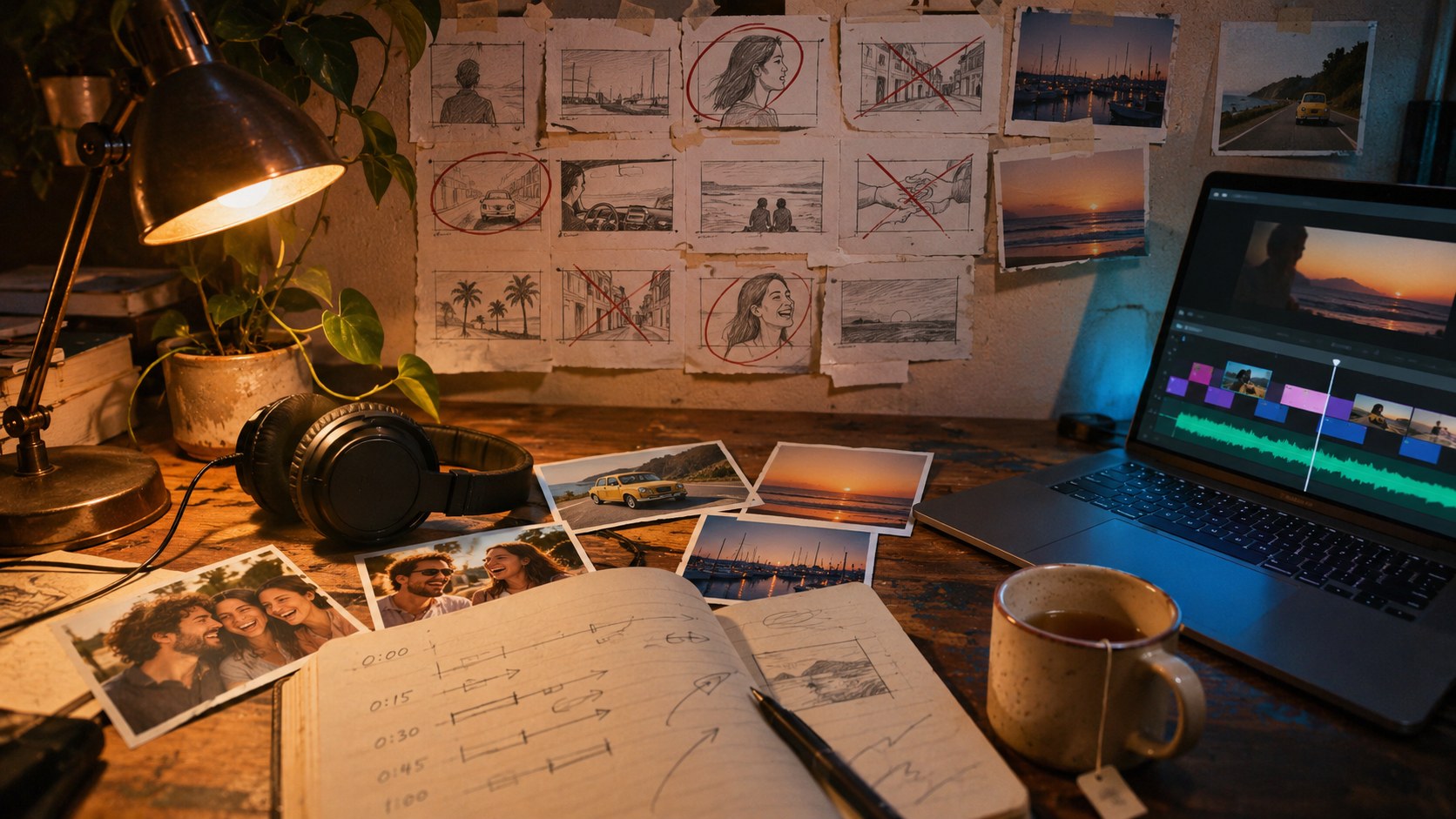
i make short motion films for Dearwhile, the memory app i am building. no After Effects, no camera, no studio. i direct, and AI makes. this post is the whole process, step by step, with the decisions behind each step and the notes i gave when something was wrong.
i am writing it a specific way. you should be able to read it and copy the process. but it is also written so that if you hand this link to an AI agent and say "make a film like this", it can learn how i think, not just what i did. so every step has four parts: what i decide, what the AI does, where i push back, and the reasoning. the reasoning is the important bit. almost nothing here is a rule. most of it is a judgment that changes from film to film, and i will say when that is the case.
the films i will keep coming back to
these are the four films i use as examples all through the post. watch them first (sound on), so you know which one i mean when i name it.
Some of it
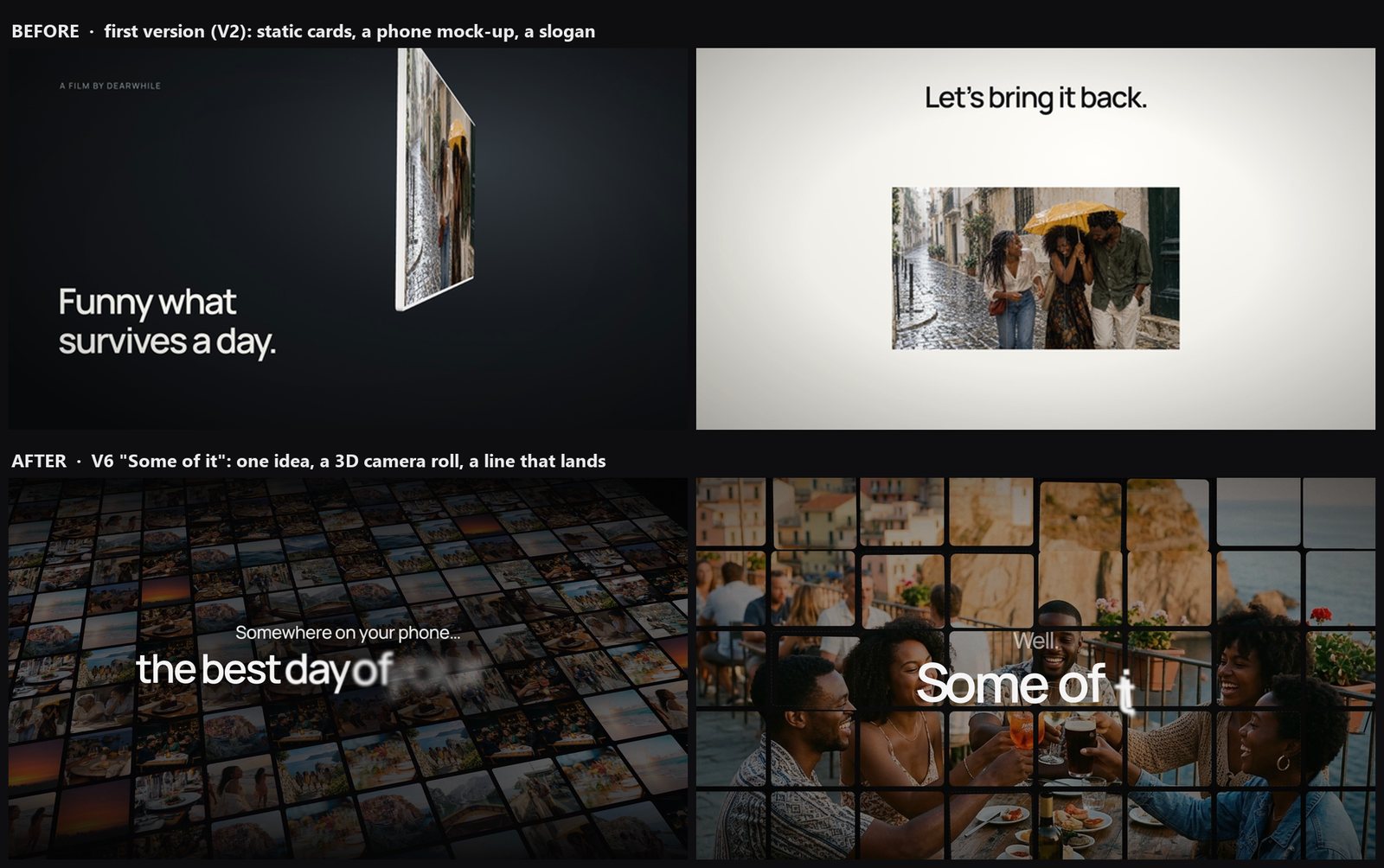
the launch film. a 3D camera roll races past, the voice says the best day of your year is somewhere on your phone, then the photo shatters: "well. some of it." it is about the problem that your memories are split across everyone's phones.
Who has the pics?
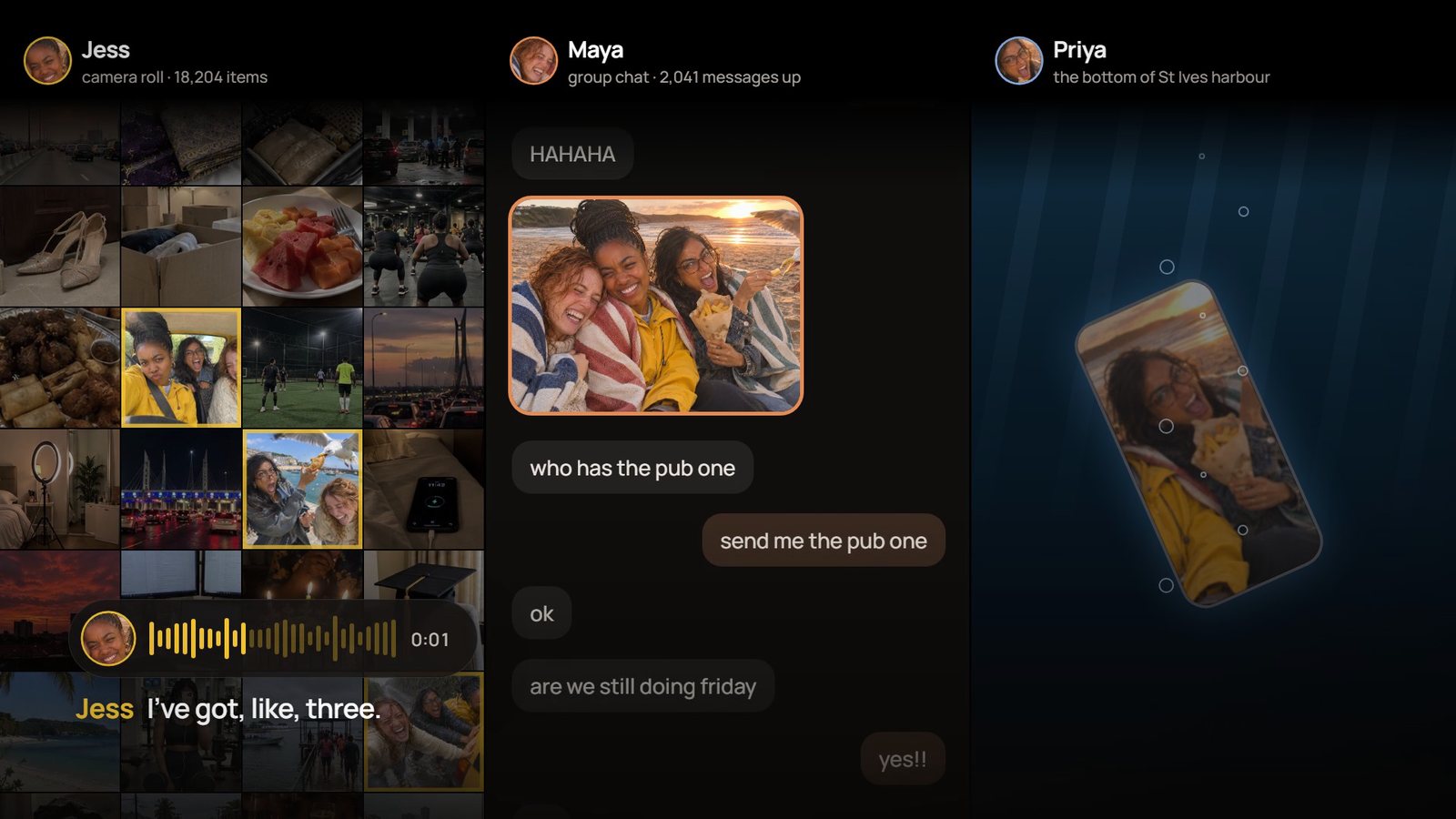
a group chat where everyone keeps asking who has the photos from the trip, cut to a song i picked. every message in the chat comes back as a photo in the app.
The Shoebox
three generations of keeping photos. my grandma kept hers in a shoebox, my mum kept hers in an album, mine are somewhere in a camera roll of 41,000 pictures.
Do you lot remember Cornwall?
three friends trying to remember a trip in a voice-note thread. a seagull steals a pasty, a tiny Fiat gets pushed up a hill in the rain, and nobody can find the pictures. no narrator, just them talking.
there are two more films i mention only as lessons, because they did not work: One shot, which was too slow and too busy, and a museum concept that never got past the storyboard. the failures taught me as much as the good ones.
0. the setup
the tools. this is the full list, nothing hidden:
Claude Code, running Claude Opus 5.5 on medium effort. it writes the script drafts, the storyboard, every scene in code, the timing, the audio mix, and it renders the film. medium is enough. the quality comes from the direction and the review loop, not from turning the effort up.
Remotion, which makes videos out of React code. every frame is a web page rendered to video. this is why the AI can build a film at all: it is writing code, which is what it is best at.
ChatGPT for every photo. the people, the places, the moments. none of it is stock.
ElevenLabs for the voices and the sound effects, and sometimes the music.
my own audio, sometimes. a track i like, or just a description of what the sound should feel like.
the browser decides how hands-off it can be. most of this work happens in a browser: ChatGPT for images, ElevenLabs for voices and sounds. Claude Code has its own built-in browser, and that is my default, but in it i have to approve saves myself. so for longer runs, where i want to walk away, i log in to ChatGPT and ElevenLabs in Edge or Chrome and let Claude drive it through the Claude browser extension. there it can download straight into any folder without asking me each time. i log in myself, every time. the AI never types my passwords.
playbooks. after a film works, i have the AI write down how it was made: the structure, the timing method, the mix targets, what i liked. the next film starts from that. this post is the public version of those playbooks, with the reasoning left in.
the reasoning: set it up so the AI can do the slow, mechanical work alone (generating, downloading, rendering), and save your own time for the things only you can judge.
1. the idea
what i decide. the idea is the one thing i never fully hand over. sometimes i bring it outright: The Shoebox started with me saying "my grandma kept her favourite memories in a shoebox, my mum kept ours in an album". sometimes the AI pitches a handful of ideas and i pick one. sometimes i take two of its ideas and mix them, or bring my own twist into one of them. Who has the pics? came from picking the "DM" idea out of a list.
what the AI does. pitches about five ideas, each one sentence plus the hook. not five versions of one idea, five genuinely different ones.
where i push back. the museum film is the best example. the AI pitched a "permanent collection": framed memories on gallery walls, little plaques, a slow walk through. it sounds clever. i said it looked like it did not even try. it was a dressed-up metaphor with no people, no joke, nothing moving.
the reasoning, so you can judge it yourself: every film that worked is built on a small human truth people recognise straight away. everyone has asked "who has the pics?" in a group chat. everyone has a parent with a photo album. then there is a turn: something funny or something that catches you. a metaphor asks the viewer to work, and a truth makes them nod. so when you judge an idea, ask: would someone say "that is literally me" in the first three seconds? and is there something moving on screen in the first second? if not, it is probably the museum.
and never a template. when Cornwall turned out to be the best thing we had made, the obvious move was to make every film like Cornwall. i said no. it is an inspiration, not the standard. if every film copies the last good one, they all start to look the same and stop being mine. each new film should try something fresher than the last.
2. the script and the copy
what i decide. the angle, and whether a line sounds like a person. i also decide who is speaking: a narrator talking to the viewer (Some of it, The Shoebox), the characters themselves (Cornwall), or nobody at all, with the chat on screen carrying the story (Who has the pics?).
what the AI does. writes the beats, one idea each, and the lines. short lines. four or five words read well at film speed.
where i push back. on Who has the pics?, a line read "Not 248 unread. One memory." it was a fine line, but it did not fit: the film is about photos, not unread messages. i asked for copy that actually fits the context. on a client film, the voice said "chat with us on WhatsApp" while the same words were already on screen. i cut it. saying what the viewer is already reading is wasted time.
the reasoning: copy is judged against the picture, not on its own. a line can be good and still be wrong for the scene. and the voice should talk to the viewer about something they know. it should not narrate what a character is doing, because the picture already shows that.
3. the storyboard
what i decide. whether we build at all. nothing gets built until i approve the storyboard. this is the most important rule in the whole process, and it is a real rule, not a judgment call.
the reasoning: building and rendering a film takes hours. changing a storyboard takes minutes. the films we built straight from a script got their background, their middle and their ending torn down in review. the ones with a reviewed storyboard needed small fixes.
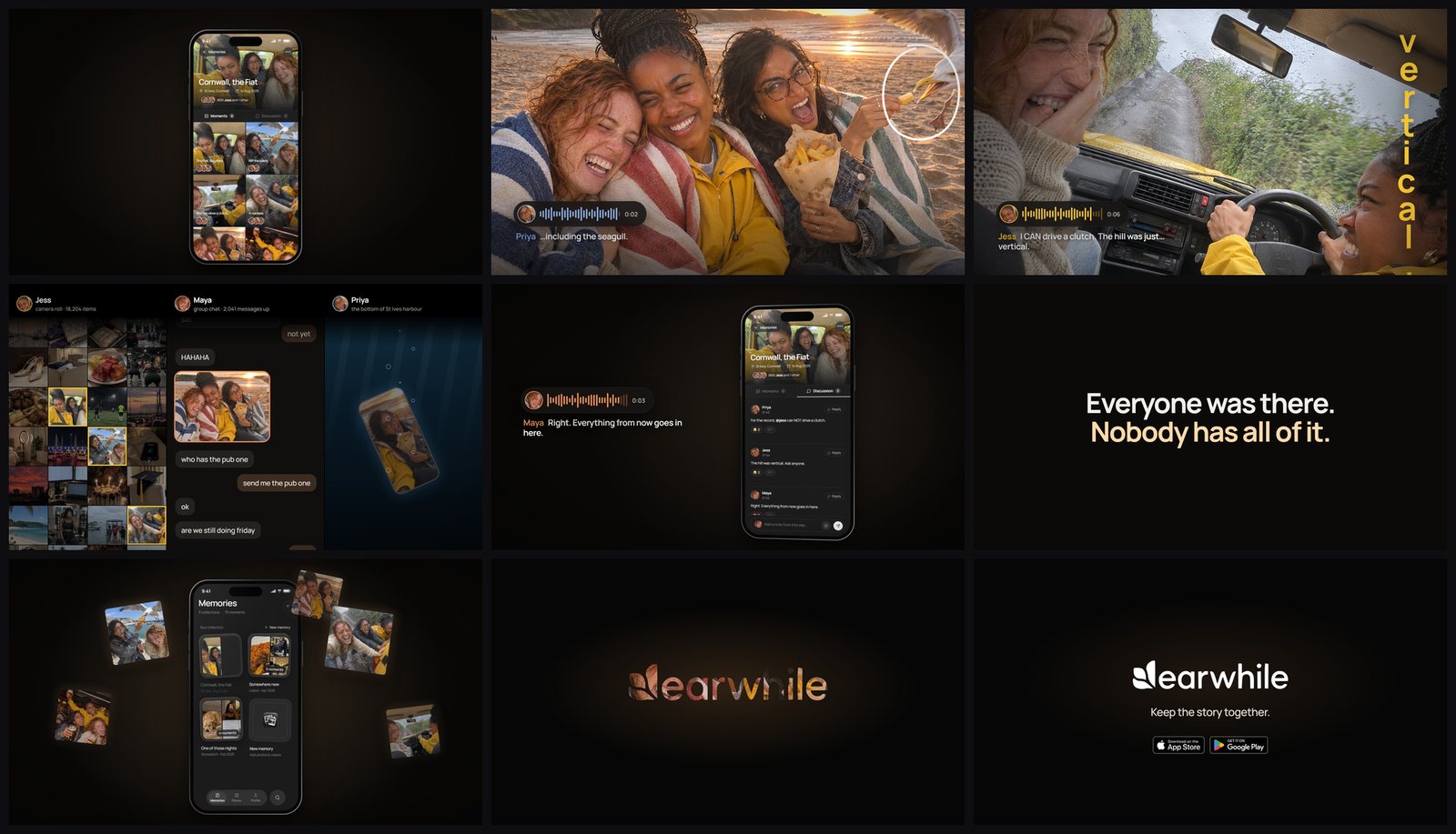
what the AI does. builds the storyboard as a web page: every frame drawn at the real film size with real layouts and real images, not grey boxes. under each frame it writes what is on screen, how it moves, and what you hear. above, a timeline. below, the palette and the type.
where i push back. i am specific. not "make it better" but "don't do it this way, do it that way". some real notes:
"i would prefer light themed." on a board that was dark by default, for no reason.
"i don't think stuff should fill the whole screen." a chat UI was filling the entire square frame, so the film felt like a screen recording. we gave it space around it.
on The Shoebox: "the text is kind of on the album, so shift it a little bit down." small, but it matters.
"there are pictures we already created for something like this before." instead of drawing new placeholder frames, reuse real generated photos we already had.
"the designs for the storyboard are just poor and too basic." if the storyboard looks cheap, the film will too.
the reasoning: the storyboard should look like the finished film, not a diagram of it. if i cannot see the film in it, i cannot judge it, and every problem i miss here costs a re-render later.
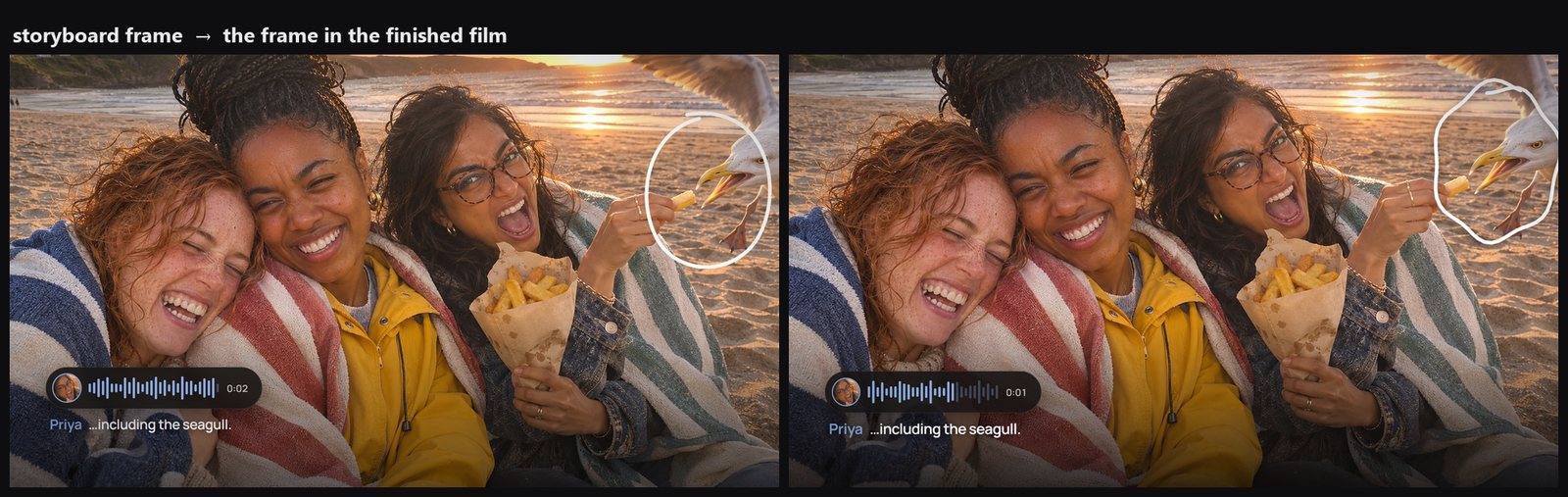
4. the photos (ChatGPT)
what i decide. the people, the places and the moments. different locations and different faces from film to film, so the films do not blur together.
what the AI does. writes the prompts and generates them in my ChatGPT. the method that keeps the people consistent is simple: the first prompt is a character reference that describes each person in detail and ends with "keep these exact three people consistent in every image after this". every follow-up prompt starts "same three women, same clothes" and describes one new moment.
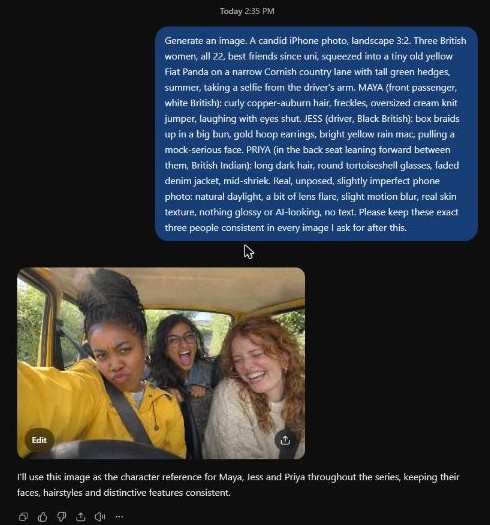
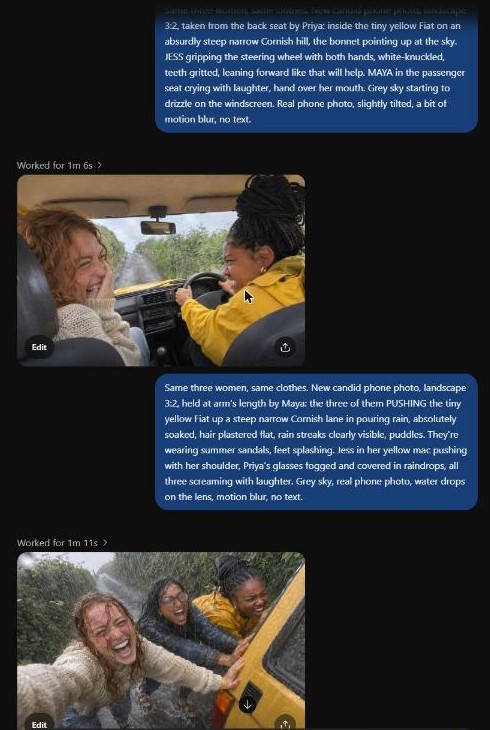
the prompt formula: who, wearing what, doing exactly what, at what moment, in what light, shot how. then "real phone photo, slight motion blur, no text". "candid", "slightly imperfect" and "nothing glossy or AI-looking" do most of the work. the brief for every image is a moment, not a pose: the gull mid-snatch, the phone frozen mid-fall.
where i push back. on a gallery scene, the photos looked designed instead of random. a real camera roll is a mess of receipts, screenshots and blurry dinners, and that is what makes it feel real. i also asked for the memory itself to show the place, not just the faces.
the reasoning: generate a photo only where a photo earns it. for a client film, a designed plate (a gradient or a solid colour) was the better choice for most frames, and photos were saved for the human moments. more images is not better. the right image on the right word is better.
5. the app UI
what i decide. that the real app is shown, accurately. i said it on Who has the pics?: i wanted to keep the app scenes because "they deserve to see what the app looks like".
what the AI does. i make the films inside the Dearwhile codebase itself, in the same project as the app. so the AI does not guess at the UI. it reads the real screens, colours, fonts and spacing from the code and rebuilds each screen as live components, so every tile, note and photo can animate on its own. if you are not working inside the product's code, the alternative is to give it screenshots of the real UI and have it rebuild from those.
then comes the check that makes it work: render the rebuilt screen next to the real screenshot and fix the differences (weights, sizes, offsets) until you cannot tell which is which.
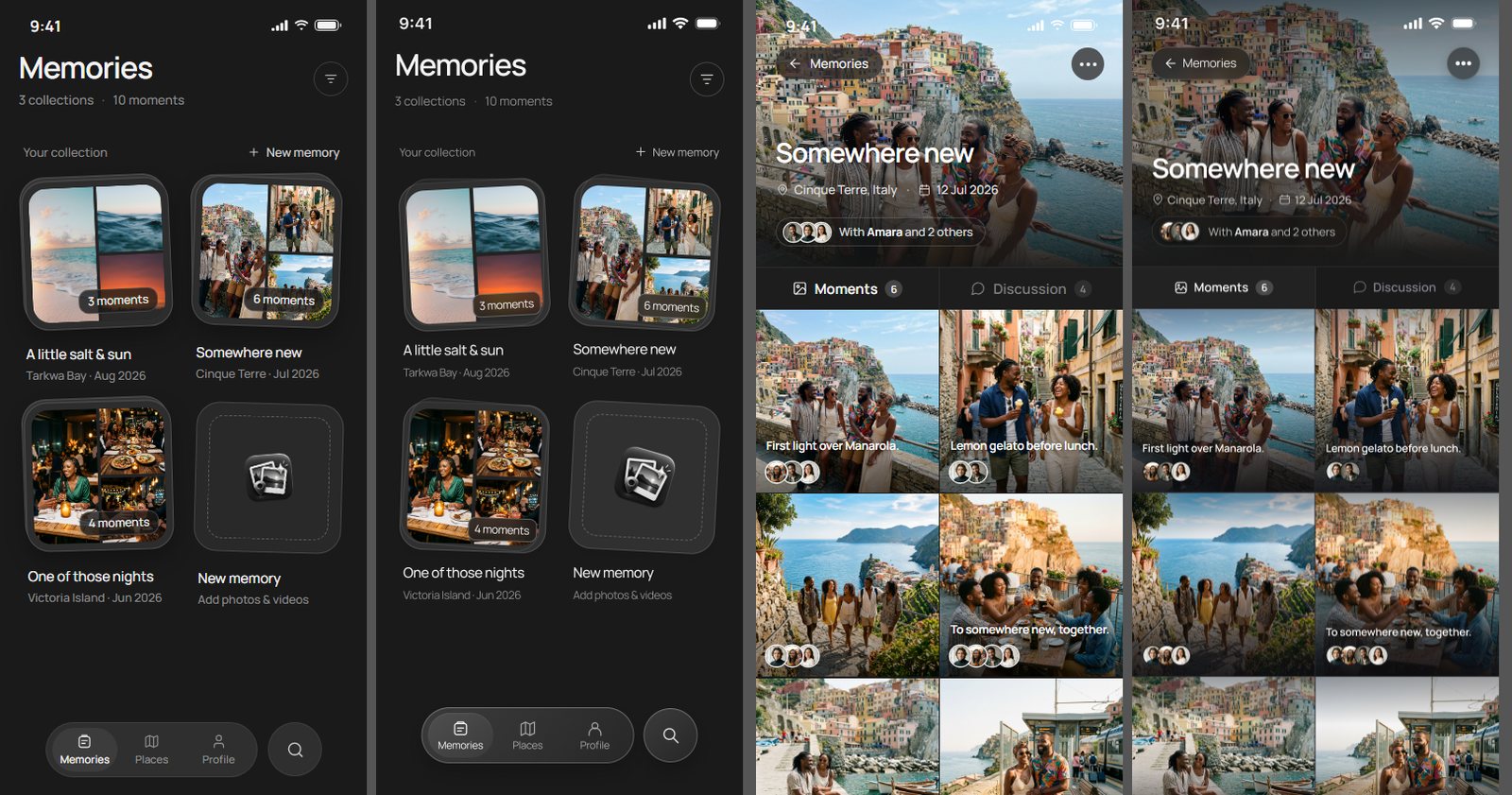
where i push back. on a film set in Doha, the mock-up looked "recreated instead of actually making it very accurate", a rough copy that did not do the app justice. and never invent features. annotations outside the phone are fine. fake UI inside it is not.
the reasoning: a viewer trusts what looks real. a slightly-off rebuild feels like a fake ad, even if they cannot say why. and on some films there is no phone at all: for one client film i asked for no phone mock-ups, with the chat living straight in the frame. whether to show a device is a decision for each film.
6. the voice (ElevenLabs)
what i decide. the voice. always. i rejected a voice once just because it was picked for me. you know your brand, and the AI is choosing from text descriptions it cannot hear.
what the AI does. writes the script with the model's emotion tags (Eleven v4 takes things like [giggling] or [deadpan] inline) and generates in my ElevenLabs. for a narrator it types the whole script as one paragraph, because each paragraph is its own block and only the focused one gets generated. for Cornwall it used multi-speaker mode: three voices i chose, written as one continuous conversation, so the timing and the interruptions between them stay real.
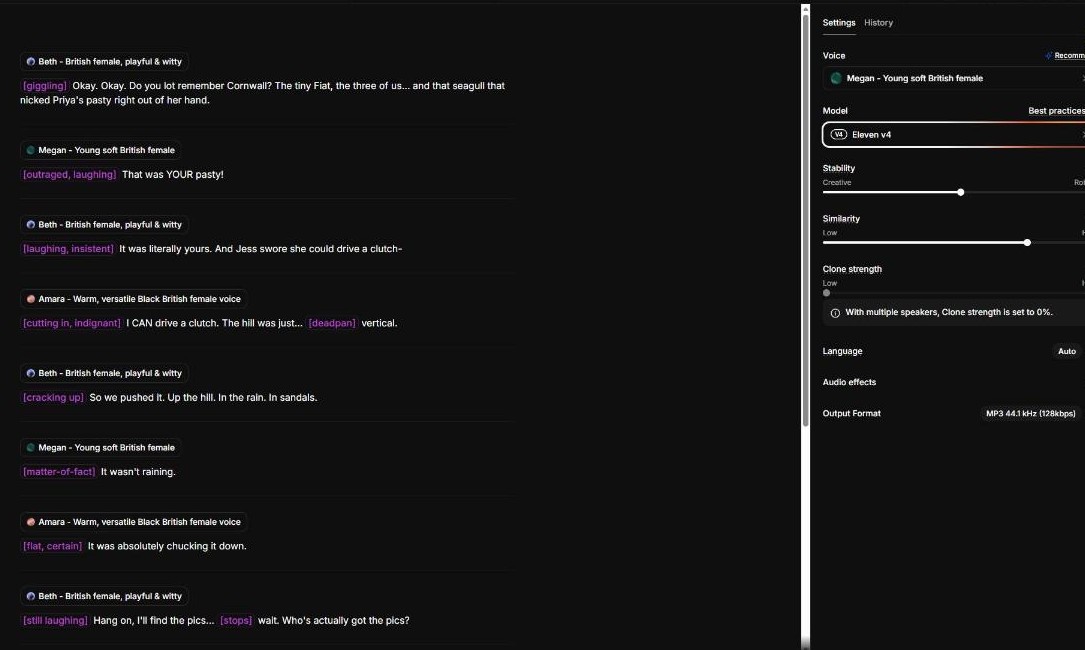
two takes, or one. we generate two takes and pick the clearest. if you are watching your credits, one is fine. the AI cannot hear, so it transcribes each take with word timestamps and compares them. then it cuts the take on its natural pauses. it never stretches the audio to fit.
when the right voice does not exist, design it. on a client film, a family group chat, one of the messages is a voice note from Grandma, seeing her granddaughter off to London. the AI searched the ElevenLabs voice library for an older Nigerian woman and found nothing close. a young voice doing an old accent would have ruined the moment, so we made one with ElevenLabs Voice Design. you describe the voice in plain words, give it the line it should say, and it generates three previews to choose from.
the description was:
An elderly Nigerian Yoruba grandmother in her late seventies, recording a WhatsApp voice note on her phone. Warm, slightly frail, affectionate and a little bossy, with a thick Lagos Yoruba Nigerian English accent and a slow, sing-song cadence. Natural phone microphone, intimate, close.
and her line: "Bimpe, my daughter... when you reach that London, ehn... the first thing you must do is to call your mother. You hear me? And carry sweater o, that place is very cold."
the reasoning: look at how the description is built. age and background first, then the situation she is recording in (a voice note on her phone, so the mic sounds like a phone, not a studio), then personality (warm, a little bossy), then accent and rhythm. and the sample line is written the way she would actually talk, with the "ehn" and the "o". the line shapes the voice as much as the description does. a custom voice is worth it when the character is specific and the library only gets you close. close is not enough when a real person in the audience will know exactly how their own grandma sounds.
where i push back. on a client film, the first cut put the voice lines on the storyboard's timings. i said the voice and the sound effects felt "just dumped inside, not cut to fit". storyboard timings are guesses, and real voice lines run longer.
the reasoning: generate the voice before the final build, measure every line, and set the scene lengths from the voice. the picture is fitted to the voice, never the other way round.
7. the music
what i decide. where the music comes from. there are three options, and which one is right depends on the film:
my own track. Who has the pics? is cut to a song i picked. a real song with a real groove gives a film an energy a generated score sometimes cannot. i need the rights to use it.
a score composed in code. Some of it, The Shoebox and Cornwall have original scores written in code to fit the cut exactly: the drop lands on the logo, the music stops dead where the picture goes black. stock "uplifting corporate" tracks cheapen a film and cannot hit the cuts.
ElevenLabs Music. described by genre, mood, tempo and length. check your plan first, because downloading and commercial use need a paid tier.
what the AI does. maps the beat of any track (tempo and the first downbeat) and puts the cuts on the bars. if a track is one steady groove, it creates the shape in the edit: muffled under the opening, opening up on the turn, a fade at the end.
where i push back. the One shot film used a track i supplied, and the final mix kept a loud hit at the very end. it was the track's TikTok watermark sound, and the AI had kept it as a "closing note". the lesson for an agent: a sudden loud jump at the end of a track from a social app is probably a watermark. cut before it.
silence is a decision, not a rule. this is the clearest example of why nothing here is rigid. in Some of it, a hard cut to black and true silence before the payoff is the best moment in the film. on Who has the pics?, the AI went silent at points the same way, and i said i did not think anywhere should be silenced at all. both were right, for their own film. Some of it is a cinematic story with a breath before the emotion. Who has the pics? is a song-driven chat film, where dropping out kills the energy and breaks the flow. so judge silence by the film: does the story need a breath here, or does it need momentum?
8. the sound effects (ElevenLabs)
what i decide. whether a moment needs a sound at all.
what the AI does. writes one short, literal prompt per kind of sound: count, object, action, character, length, mic. "single crisp camera shutter click, short, dry". "felt-tip marker quickly drawing one circle on glossy paper, 1 second, close mic, dry". "dry" means the room comes from the mix, not the file. each prompt gives four variants, and the AI picks the punchiest by analysing them, because it cannot listen.
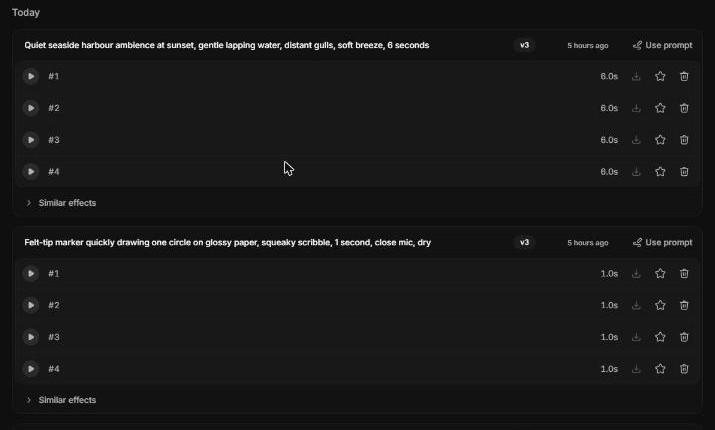
where i push back. One shot had 89 sound cues. i said the sound effects in some places did not match, and some moments did not need a sound but had one anyway. it sounded busy, and busy sounds cheap.
the reasoning: give a sound only to something you can clearly see happen: a photo landing, a word slamming in, a door, a gull. keep the count low. if you would not notice the sound missing, it should not be there.
9. timing to the voice and the beat
this is the step that makes it feel professional, and it is mostly maths. one file holds every time: when each voice line starts, when each word lands, where each sound goes, where each scene starts. the picture and the audio mix both read from that file, so changing one time moves everything with it.
in Cornwall, every photo lands on the word being said. "pushed it" slams in on Maya saying it. "in the rain" hits with the rain. the captions are styled like the voice note that is playing.
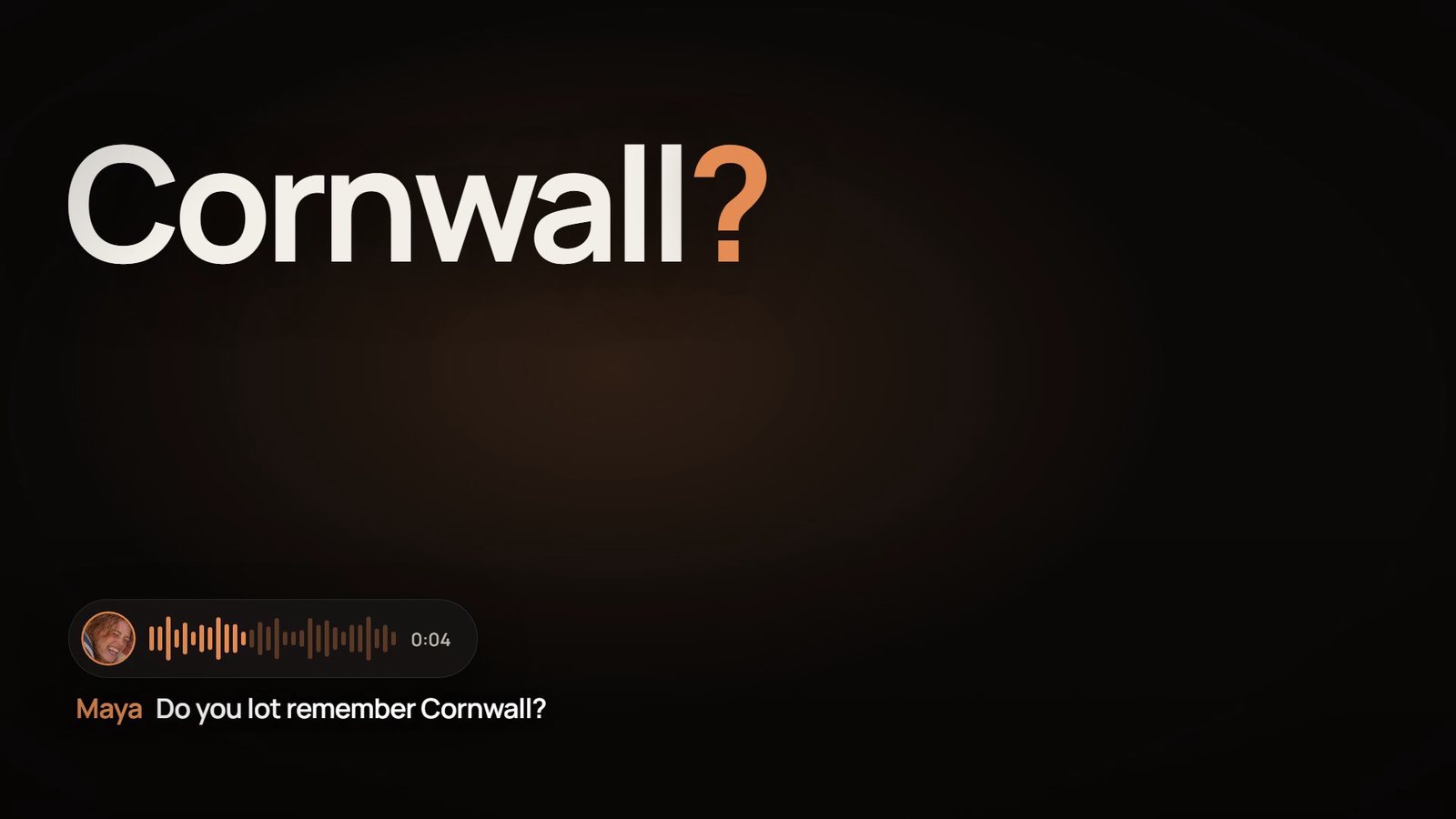
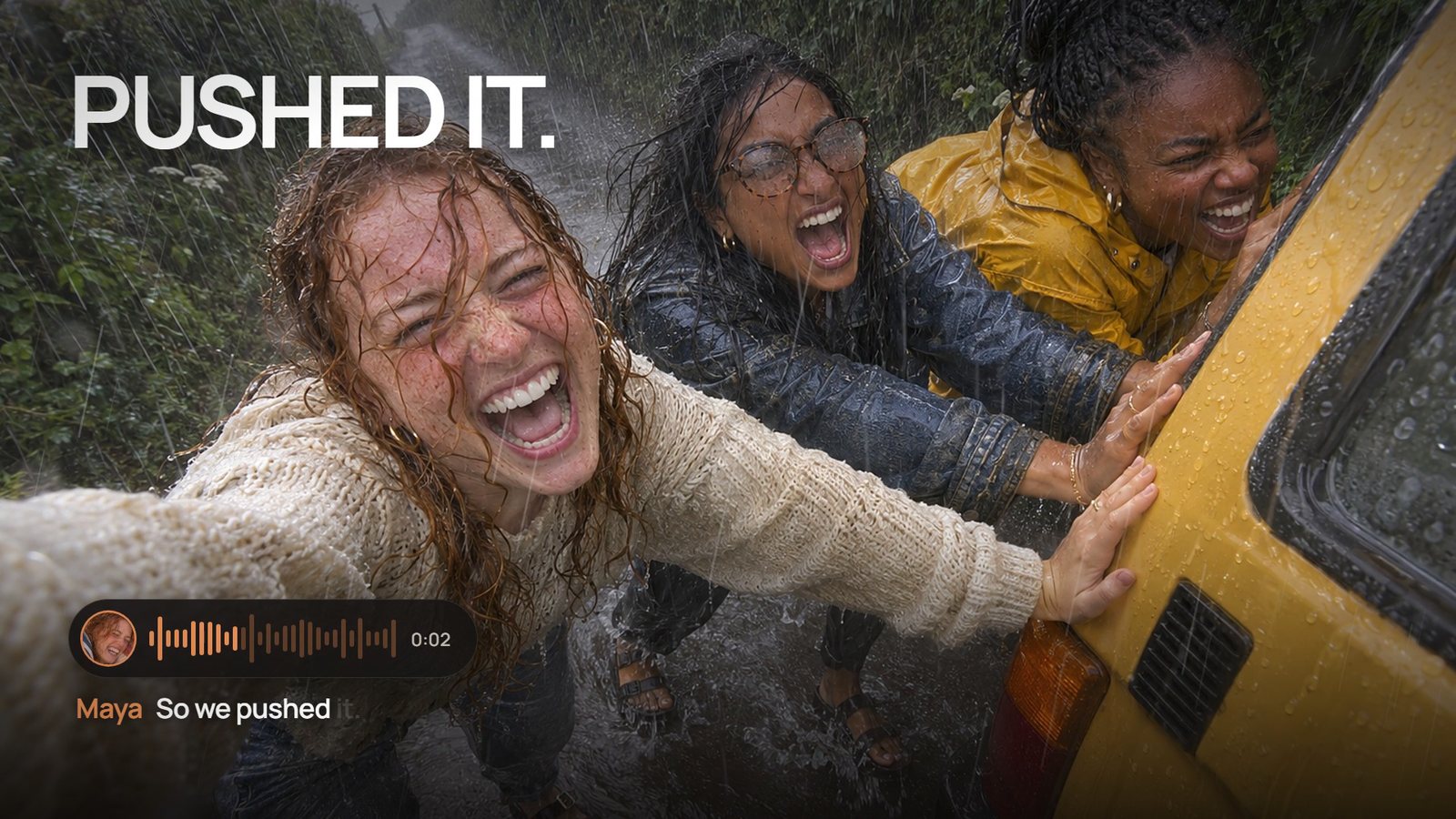
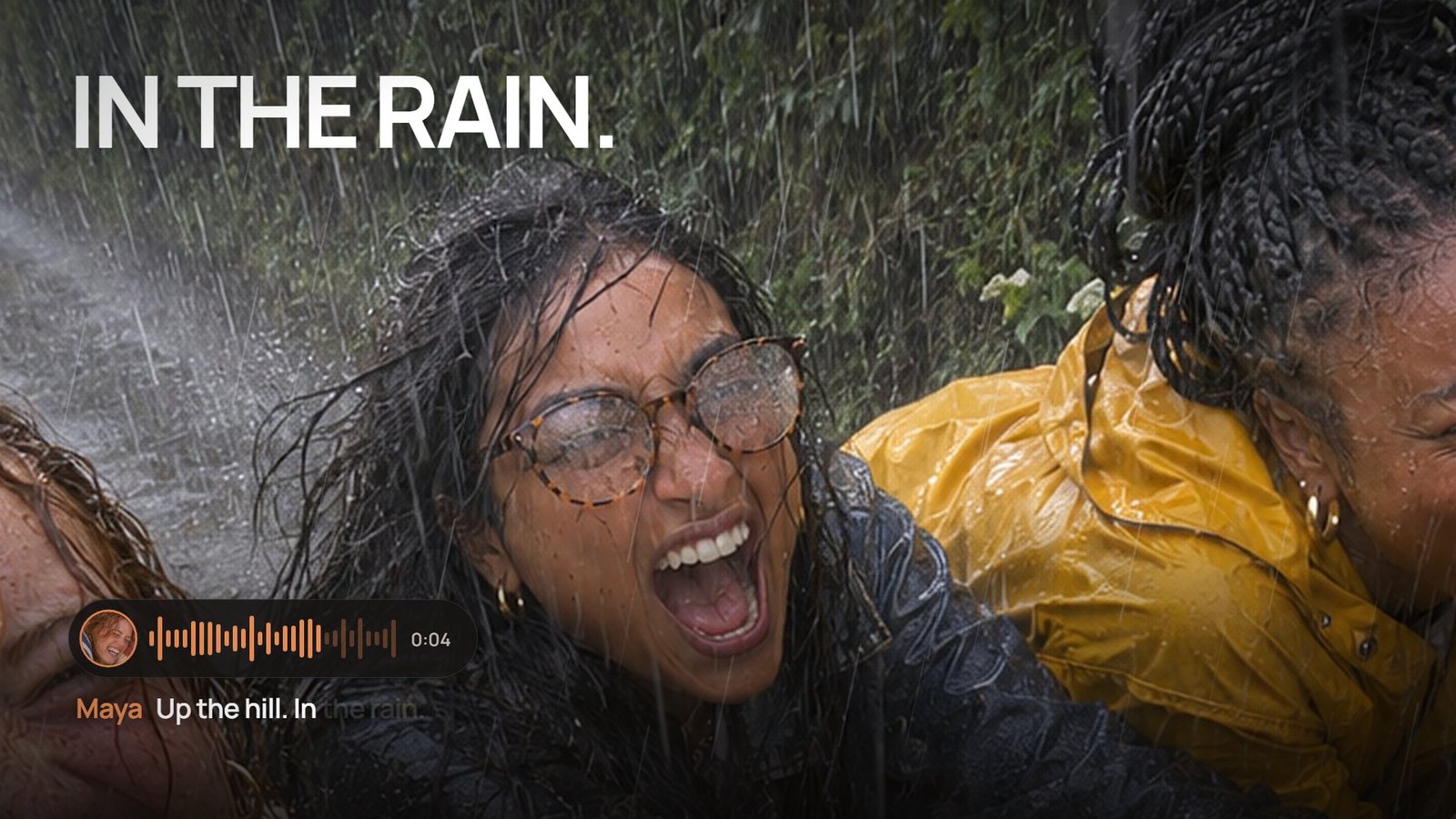
the reasoning: when picture, words and sound land together, the film feels intentional. when they are close but not together, it feels like a slideshow with audio laid over it, even if nobody can say why.
10. pace and motion
where i push back. this is where most of my notes have gone. a few, in my words:
One shot: "too slow paced. everything just seems dragged." scenes sat on a fixed 4-second grid, and short lines hung on screen for seconds after they landed.
Who has the pics?: "the moments in the memory pop up way too slow" in the "everyone adds their own" part, and a section was looped, which broke the flow.
The Shoebox: the first cut's transitions did not impress me. a static box shot, a blur into a photo, an empty phone rising into frame.
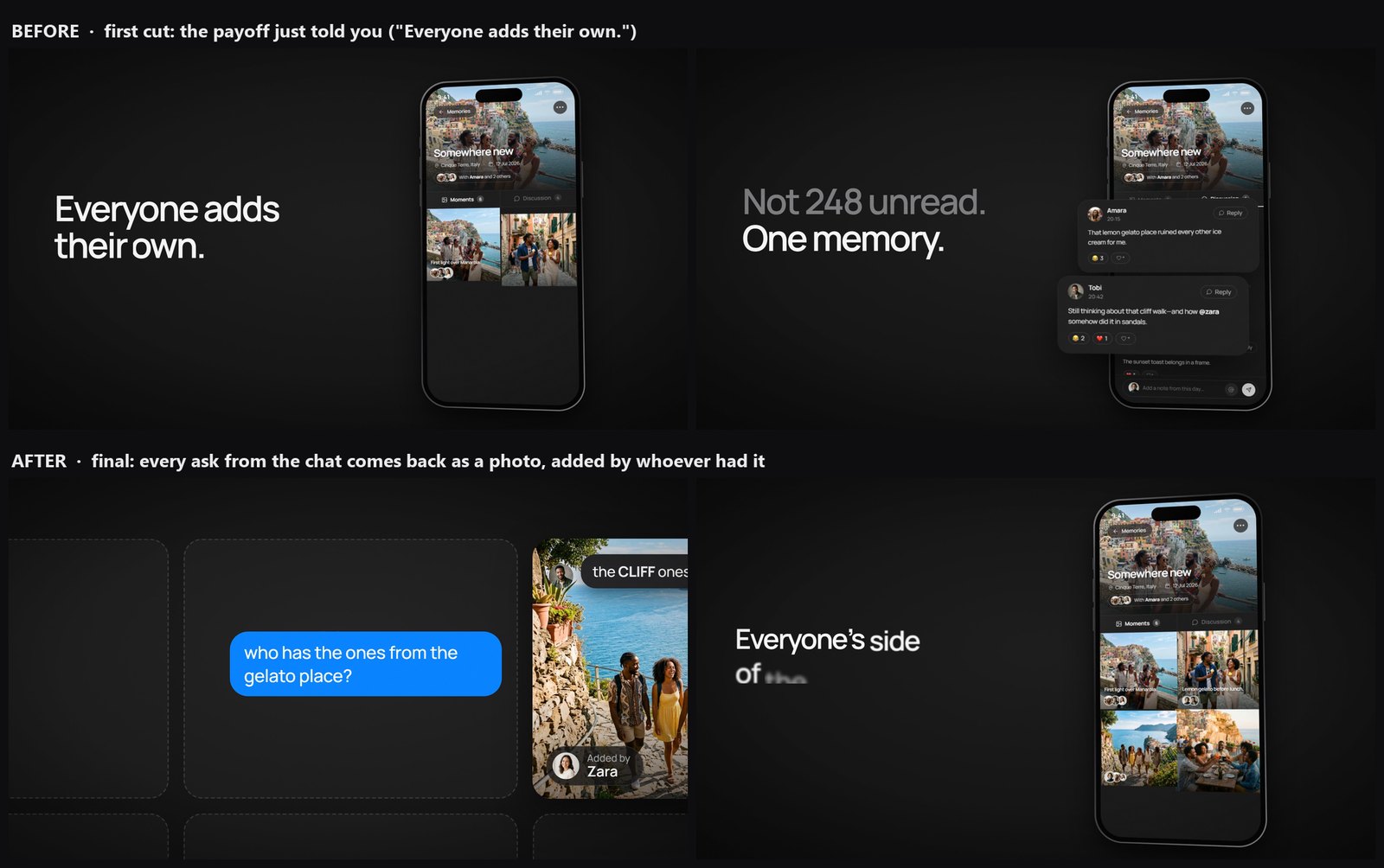
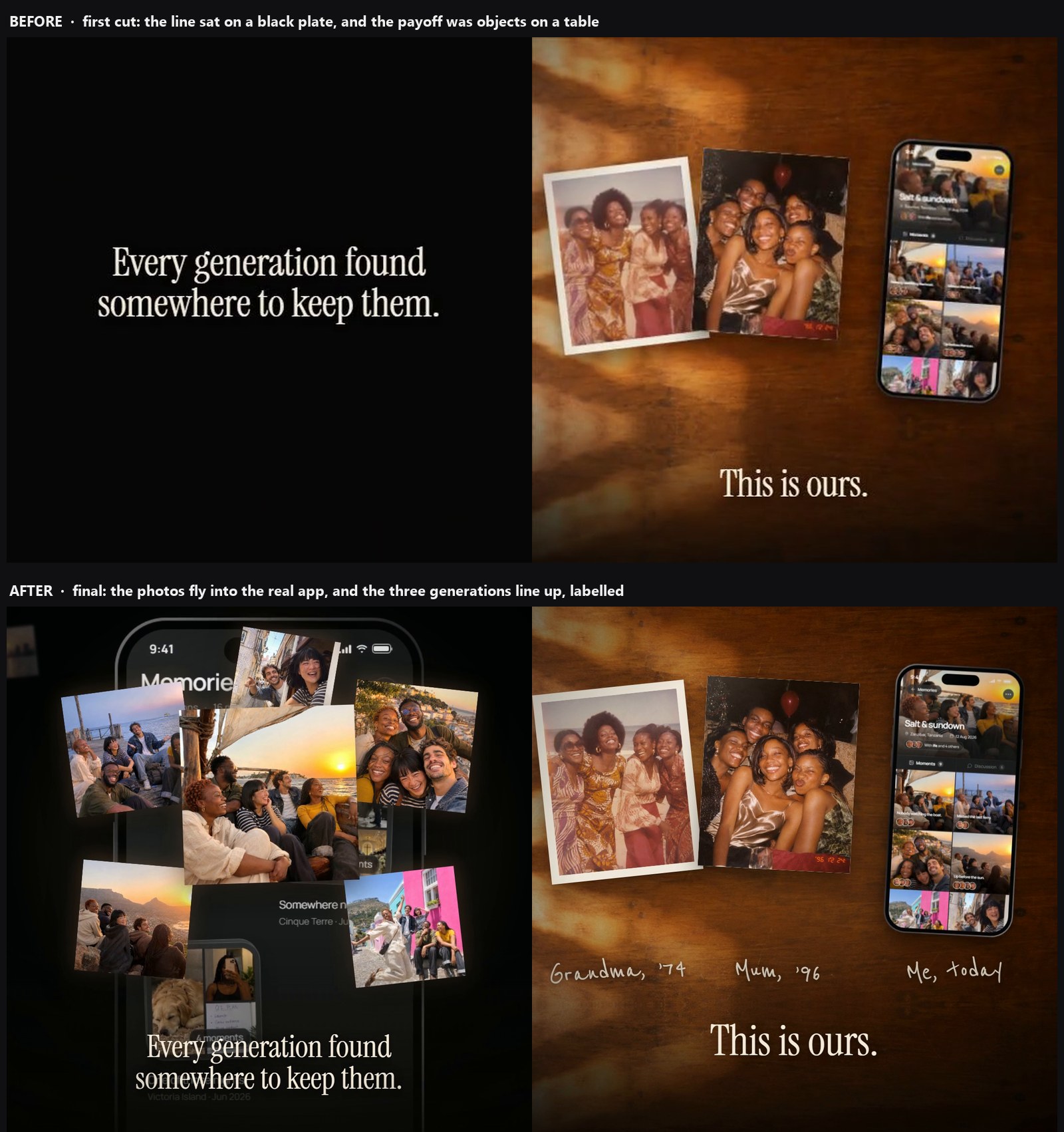
the reasoning, so an agent can pace a film it has never seen: vary the pace on purpose. most of a film should be fast, with one or two moments that are deliberately slow, because slow only means something next to fast. cut as soon as a line has landed. and every transition should be designed: either a continuous move (the photo lifting out of the box to fill the frame, a full-screen photo pulling back into the app) or a hard cut on the beat. a plain fade or a blur is the film admitting it did not know how to get from one shot to the next.
11. build, render, review
what the AI does. builds the scenes, then renders still frames at key moments and puts them in a contact sheet to compare with the storyboard, before rendering the full film. stills are cheap, full renders are not. on my 4-core PC, a 60-second film at 30 frames a second takes about 12 minutes to render. at 60 frames it took about 90, so we render at 30.
checking audio without ears. the AI cannot hear the film, so it plots it: voice, music and sound effects over time, with the scene changes marked. that is how it catches music louder than the voice, or an ending with no score. but a plot is not listening. i always listen.
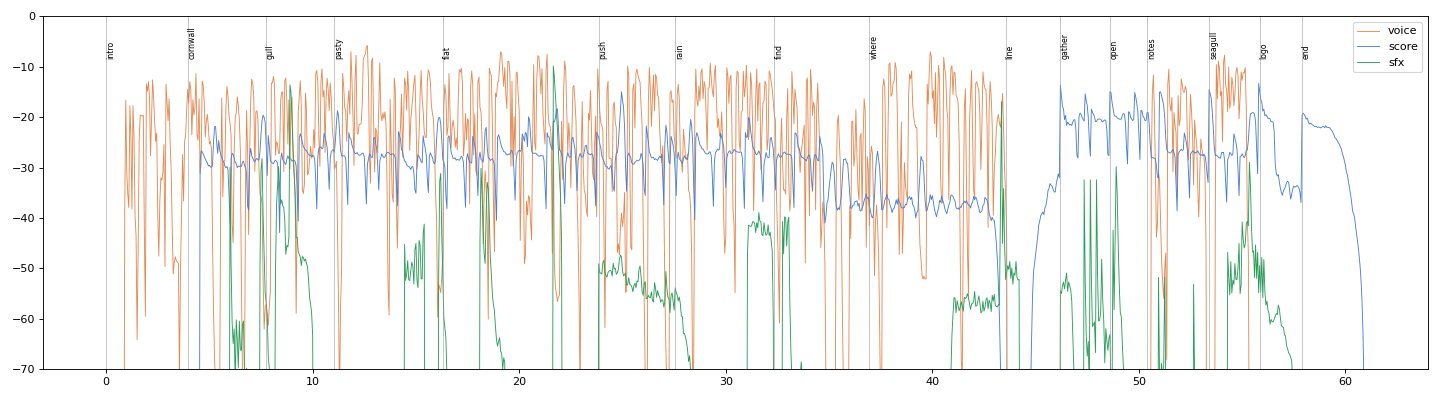
the targets. voice clearly above the music, the music ducking under every line, the master at -14 LUFS (the loudness most platforms expect).
where i push back. the first full film is never the final. the Doha film taught me that: "the only part that i like is from the year at a glance frame", and the storyboard was redesigned up to that point. it hurt, but it is the job. the AI should show a low-res pace preview before a full render, so notes like that come early.
12. what Cornwall got right
as an example of everything above working together:
the idea: a recognisable truth (nobody can find the trip photos) with funny turns (the pasty, the hill, "it wasn't raining").
the voice: no narrator, a real three-person conversation with voices i picked, kept as one take.
the photos: one ChatGPT character reference, then a moment per prompt.
the timing: every photo and every big word on its spoken word.
the sound: a score composed to the cut, plus a few ElevenLabs sounds (gulls, rain, whooshes), each on something you can see.
the payoff: everyone's photos come together in one memory in the real app, and the logo grows out of the last image.
if you are an AI reading this
if someone sent you this link and asked you to make a film like mine, here is the process compressed. but read the reasoning above, because the judgment matters more than the list.
start from a small human truth with a turn. pitch about five different ideas, and let the person pick, mix or bring their own.
write short lines. judge every line against its picture, and never have the voice say what is already on screen.
build a storyboard that looks like the finished film, and do not build anything until it is approved. take specific notes and revise as often as needed.
generate photos with a character reference first, then one moment per prompt. use real-looking, candid moments, and only where a photo earns its place.
rebuild the real UI from the real code or screenshots, check it side by side, and never invent features.
let the person choose the voice. if no library voice fits a specific character, design one from a written description and a line in their own way of talking. generate the voice before the final build, and time the picture to it.
choose the music source for the film. decide silence per film: a breath for a story, momentum for a song.
give sounds only to visible actions, and keep the count low.
vary the pace: mostly fast, one or two slow moments, and cut once a line lands. design every transition as a continuous move or a hit on the beat.
check stills before renders, plot the audio, show a pace preview, and tell the person what you could not check, because you cannot hear.
never turn the last good film into a template. borrow its craft, not its look.
that is the whole thing. i direct, the AI makes, and the films get good in the gap between the first cut and the final one. if you make something with this, show me.