🗂 Project Overview
Domestiq is a handyman marketplace that connects homeowners with trusted service providers for everyday needs — from plumbing and carpentry to painting and landscaping.The design challenge: build a platform that feels trustworthy, simple, and efficient while balancing two very different user types — customers (who want fast, reliable help) and handymen (who want fair pay and easy job management).
Role: Lead Product Designer
Scope: End-to-end design (research, UX flows, UI, design system)
Live Link: https://domestiqapp.vercel.app
🔍 Understanding the Problem
Hiring handymen today is often a hassle:
Uncertain: Customers don’t know who’s trustworthy or what a fair price is.
Fragmented: Discovery happens via word of mouth, WhatsApp groups, or random numbers online.
Frustrating for handymen: They waste time on vague leads and underpriced jobs.
I aimed to create a digital-first experience where:
Customers get transparency (clear pricing, verified profiles, location-based results).
Handymen gain predictability (structured bookings, payments, dashboards).
🎯 Design Goals
Trust first: Ratings, reviews, jobs completed visible everywhere.
Clarity in pricing: “Starting from” anchors + hybrid hourly vs per-task models.
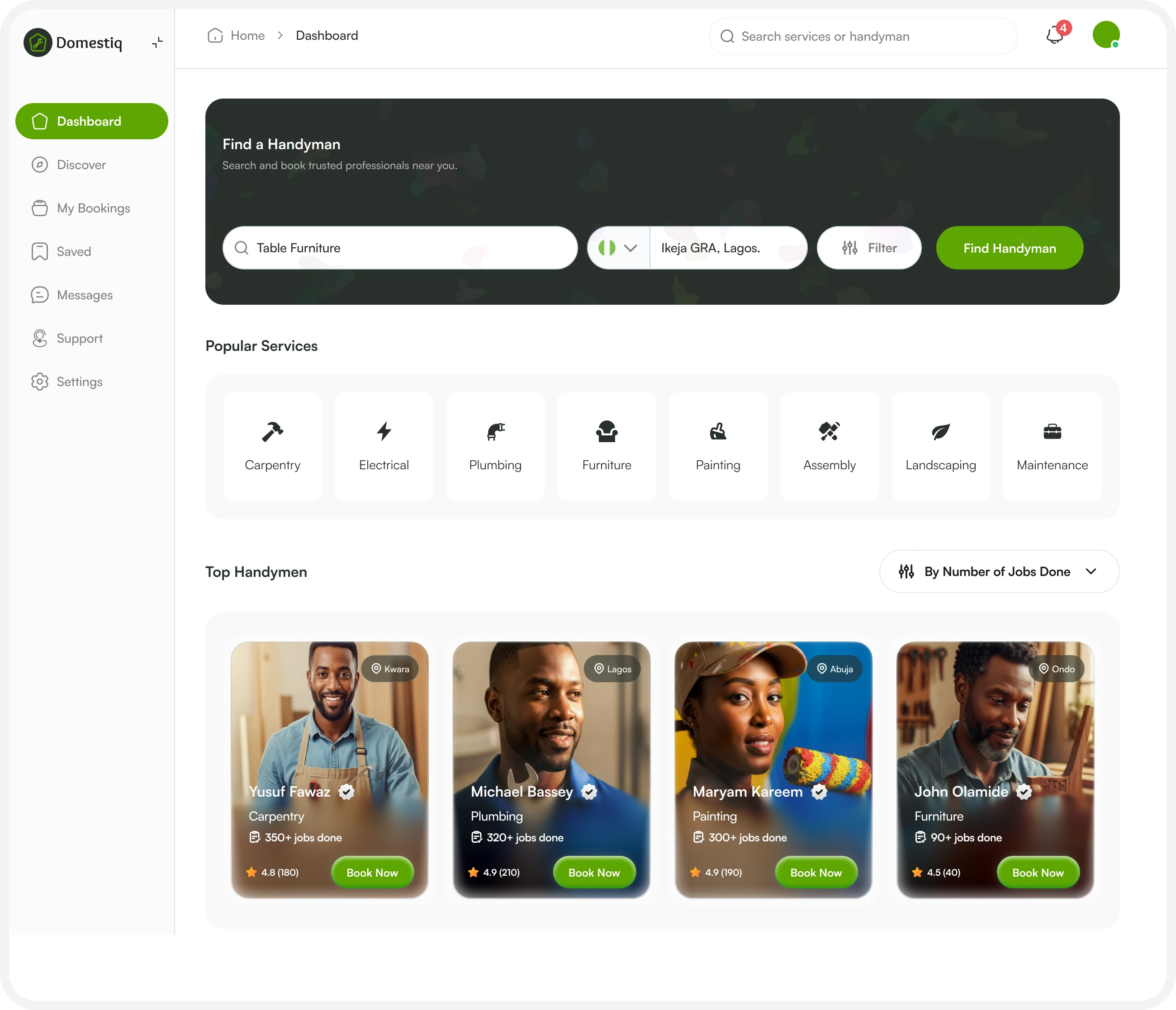
Speed in discovery: Services by default, but handymen view always available.
Contextual details: Large right-side modal for service details (no disorienting page changes).
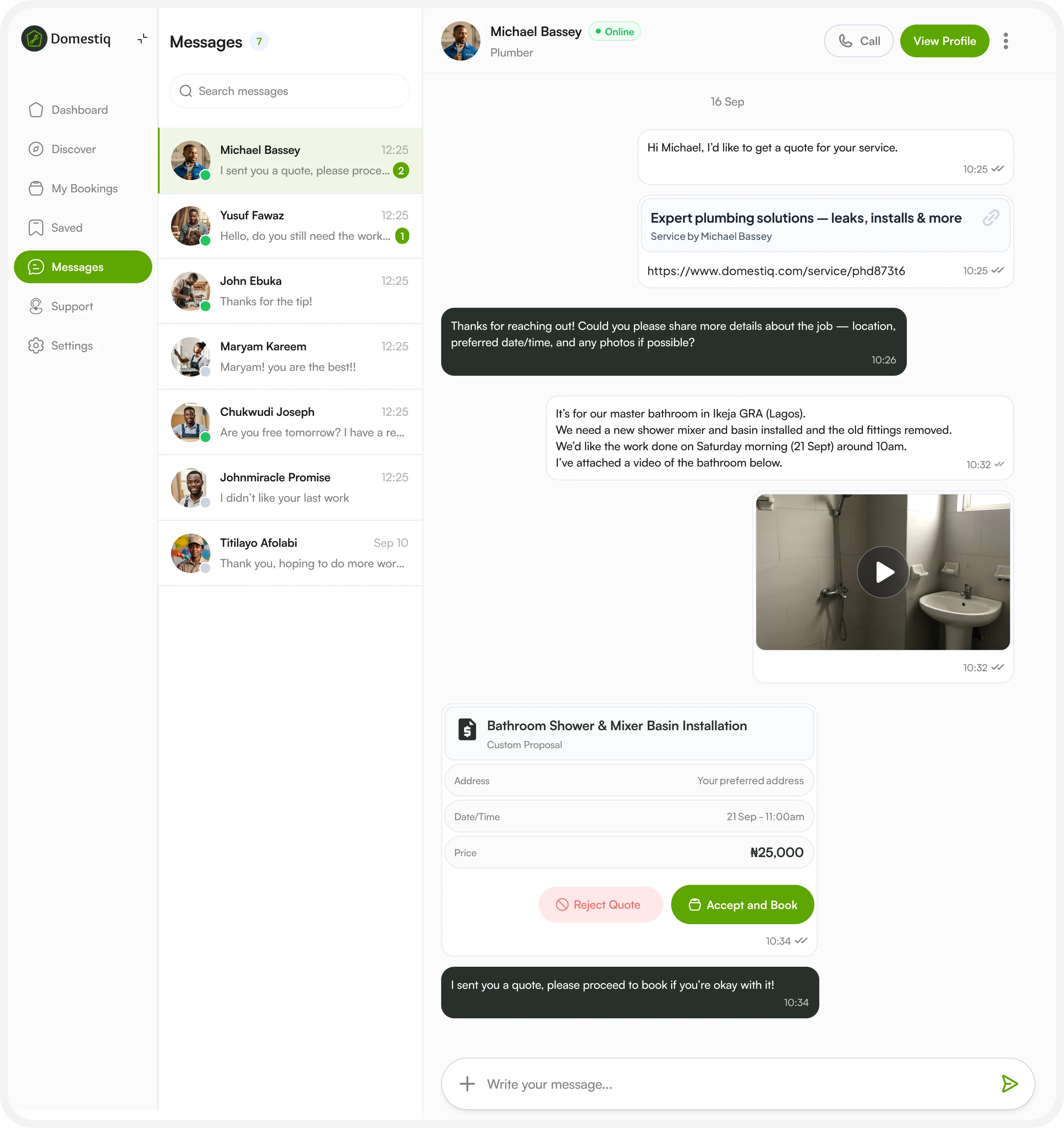
Messaging-driven quotes: Customers send photos, handymen respond with structured quote cards.
Simple dashboards: Stat cards + tables for both sides, nothing bloated.
🛠 Key Design Decisions
1. Service-first Discovery
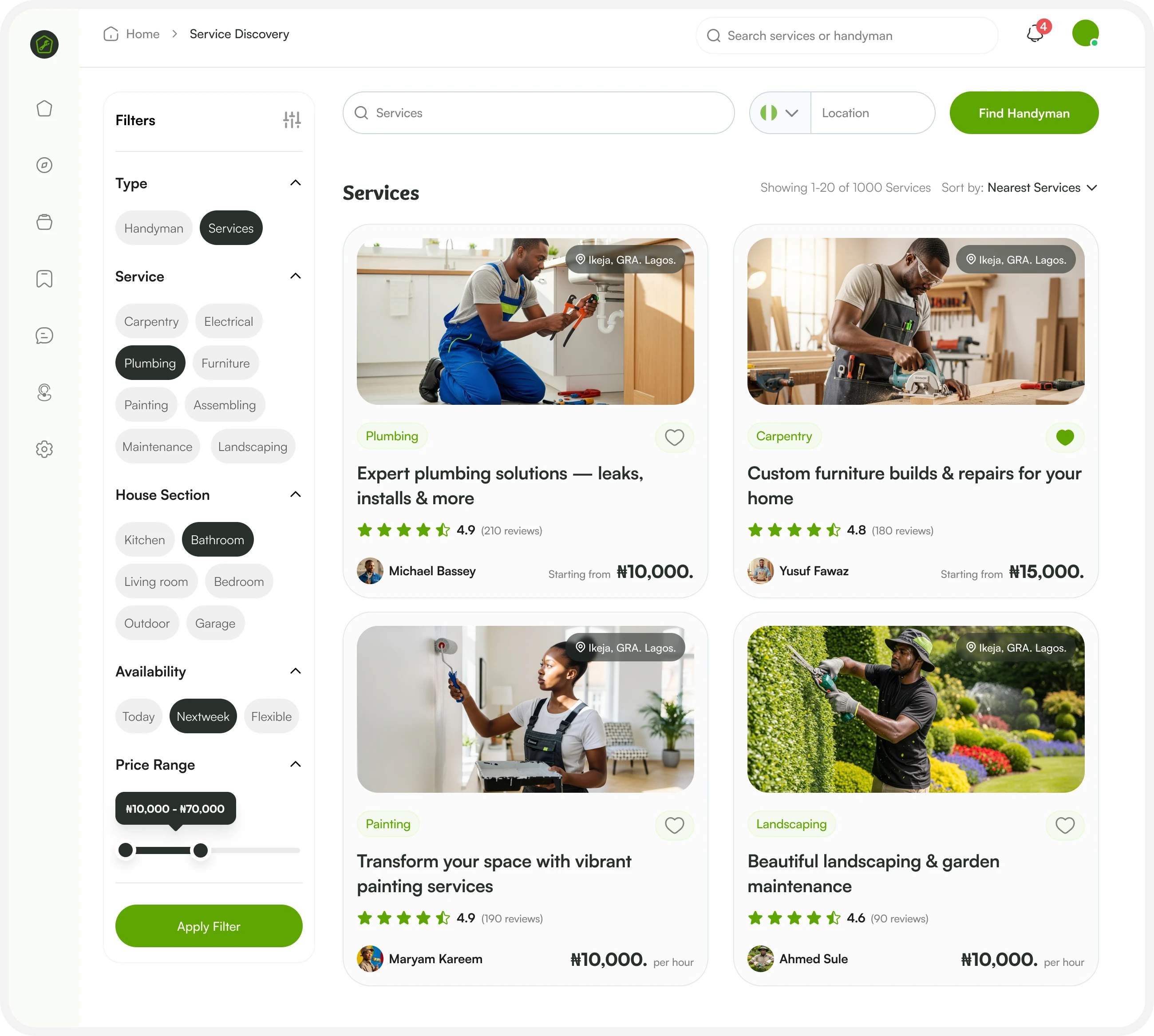
Search results default to services, not people.
Filter lets users switch to “Handymen” if they prefer to browse providers directly.
Why? Customers think “fix my leaking tap” not “find Michael.”
2. Sorting by Nearest (Not Popularity)
Default sorting is nearest to you (e.g., “Showing results near Ikeja GRA”).
In local services, proximity beats “popularity.”
Still allow switching to “Top Rated” or “Most Booked. etc”
3. Service Detail in a Right-Side Modal
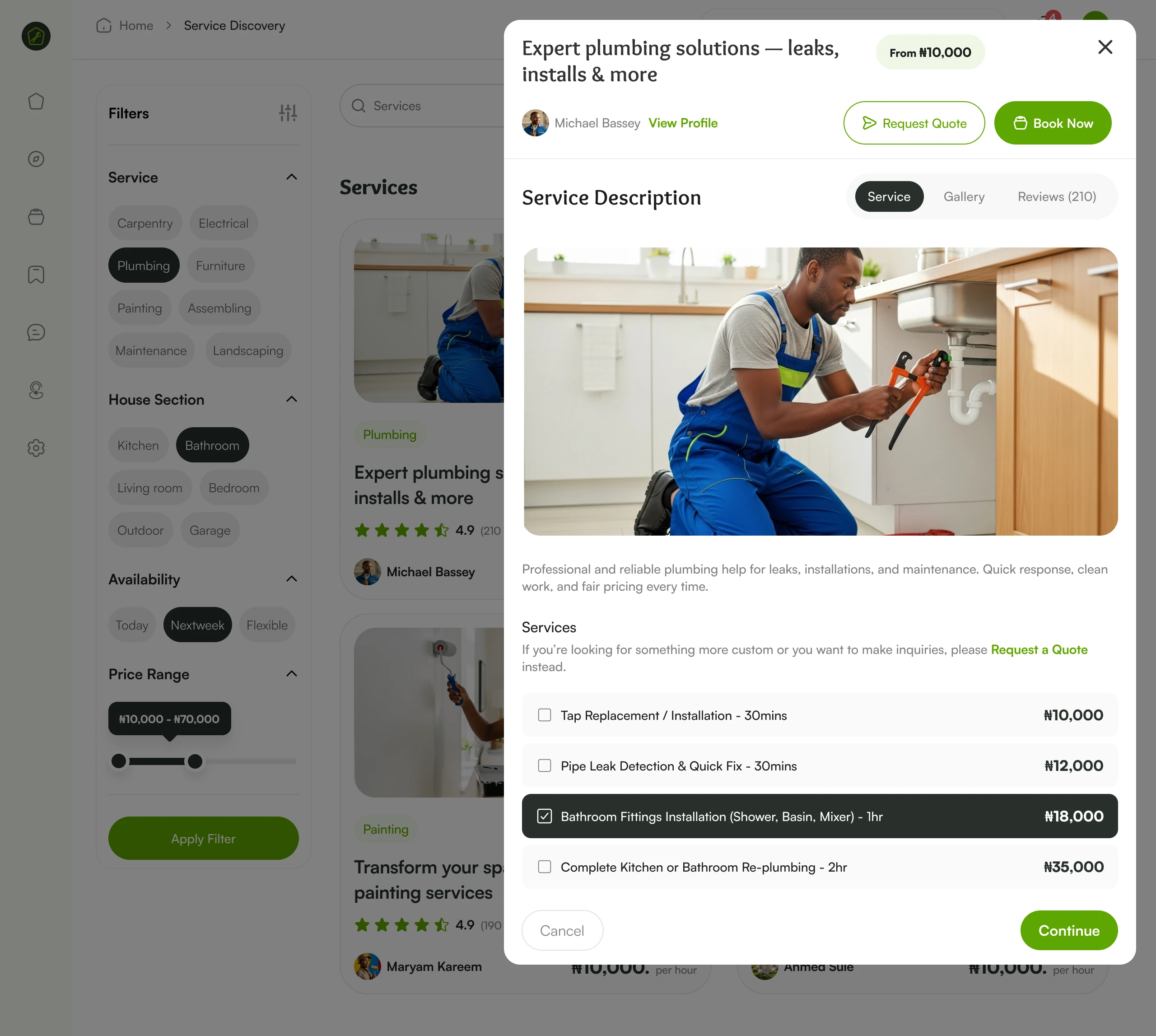
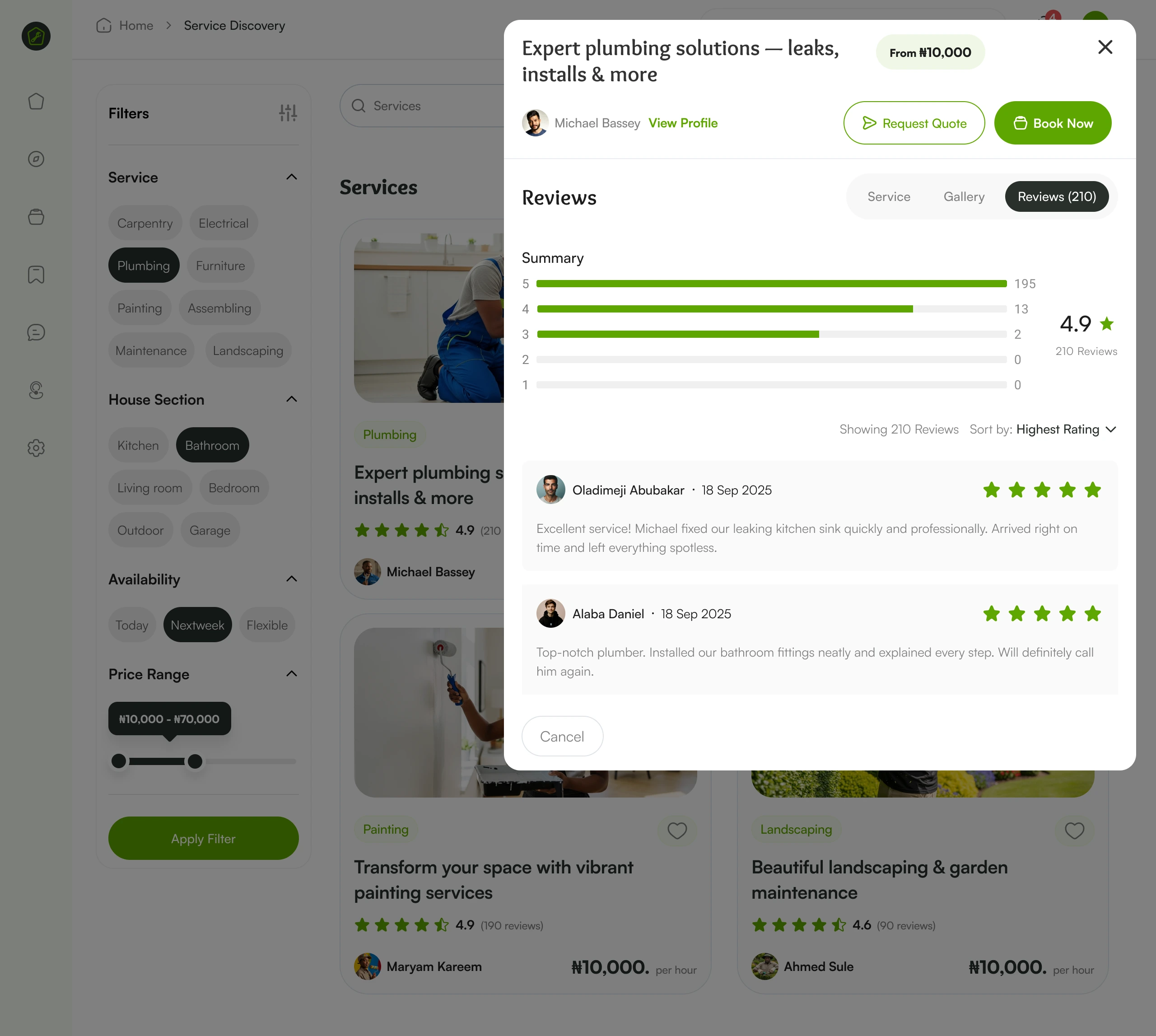
Instead of loading a new page, services open in a large sliding panel with 3 tabs:
About → Description, main image, base pricing.
Gallery → Photos of past jobs.
Reviews → Customer feedback.
This design keeps browsing uninterrupted.
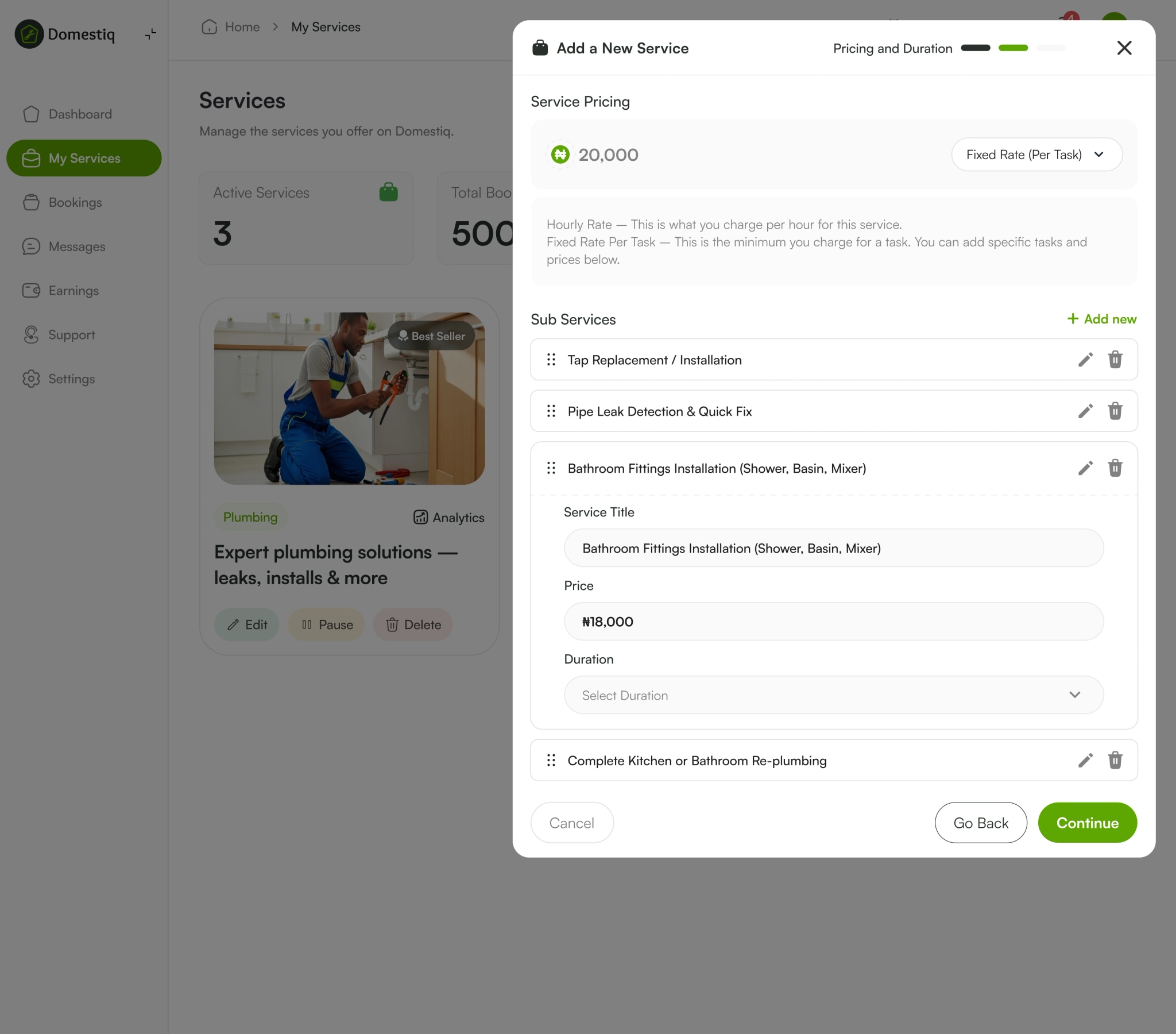
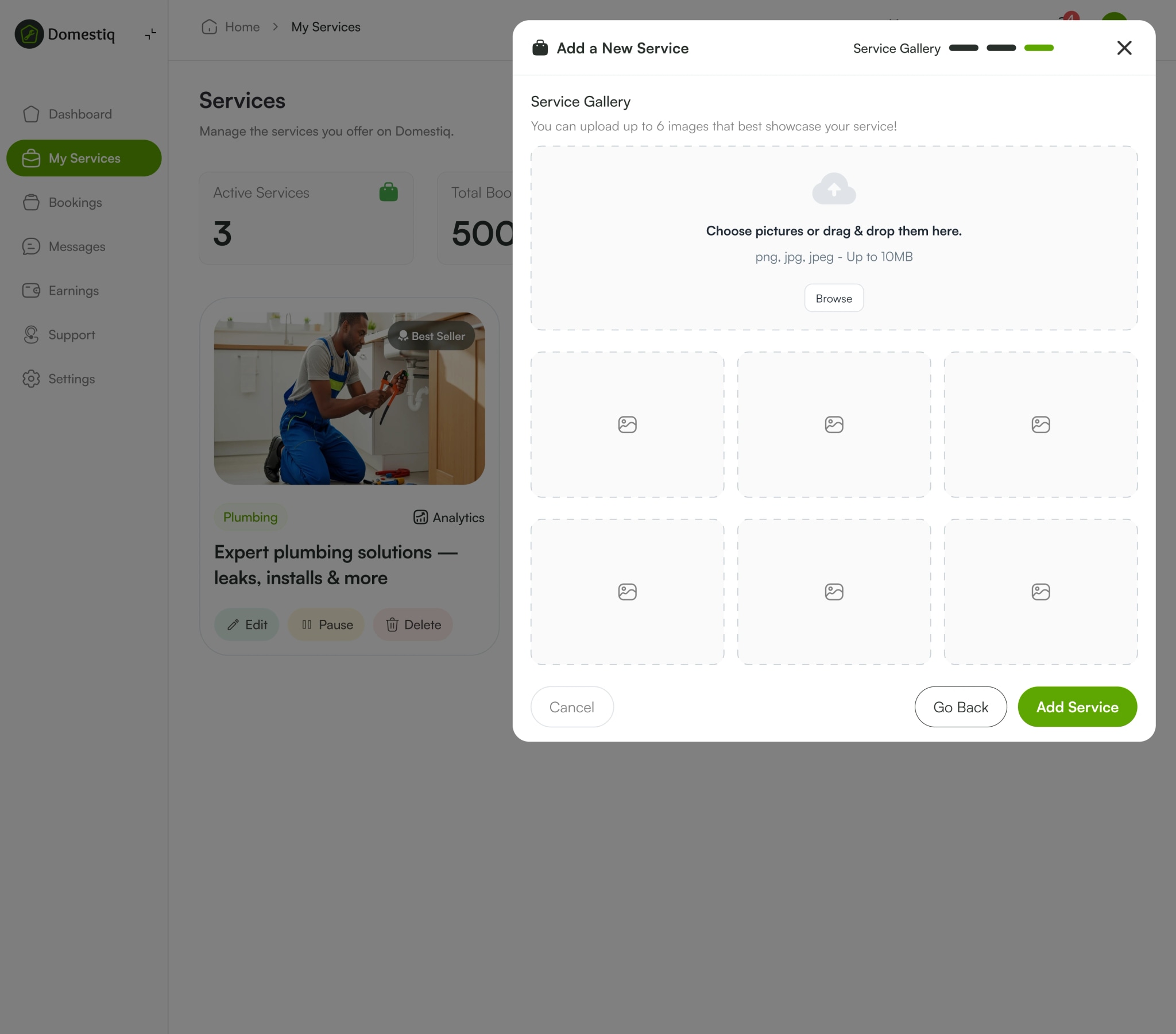
4. Hybrid Pricing (Hourly + Per Task)
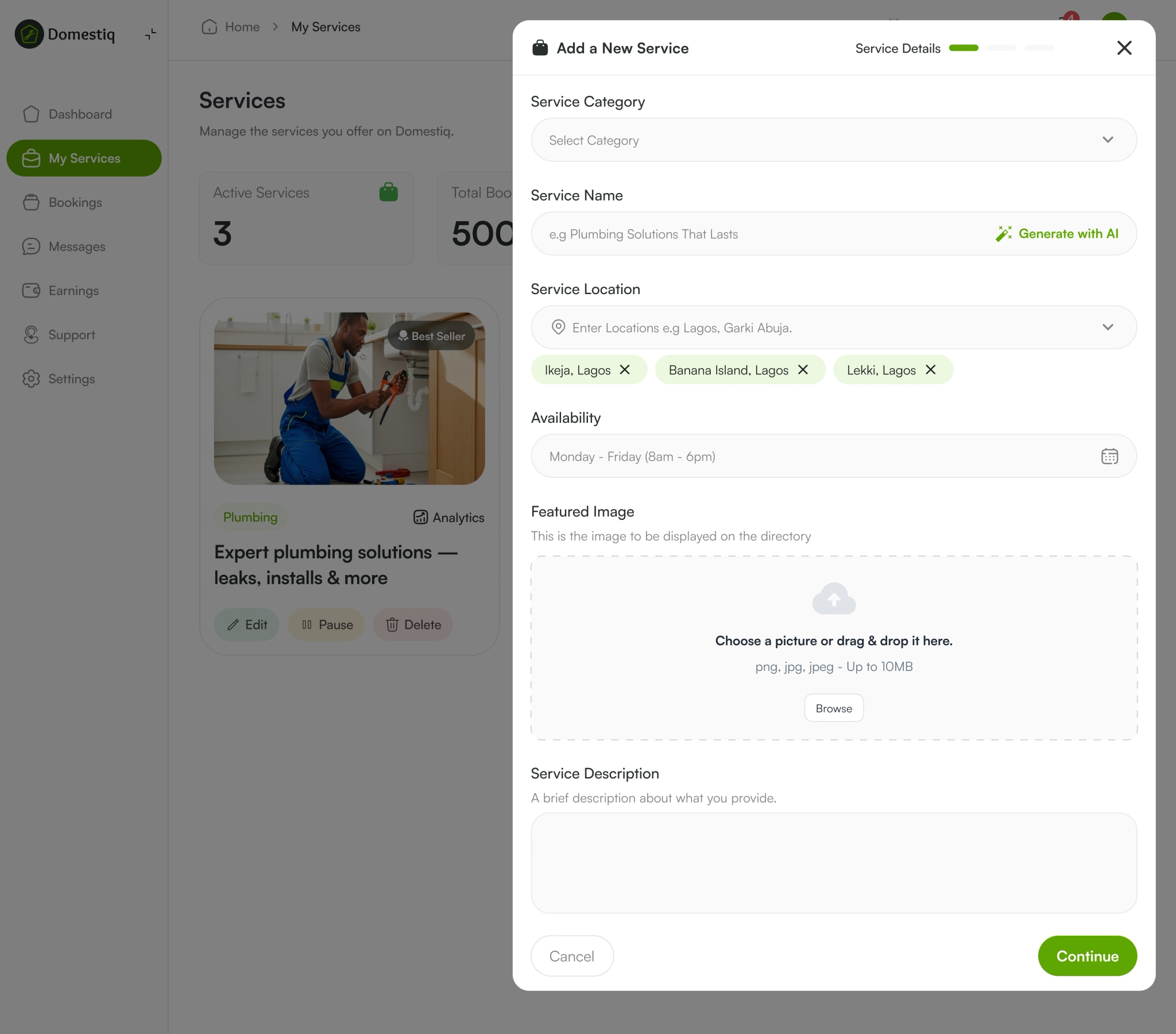
Handymen choose how to charge:
Hourly Rate — charge per hour.
Fixed per Task — charge fixed prices for specific tasks.
Handymen must set a “starting from” price (e.g. ₦10,000), then can add optional sub-tasks with individual prices.
5. Messaging + Quote Flow
Instead of forms, quoting happens directly in chat:
Customer clicks Request Quote on a service.
Auto message sent → “Hi Michael, I’d like a quote.” (Service card attached).
Handyman auto-replies asking for details/photos.
Customer shares photos + preferred time.
Handyman replies with a Quote Card (price + materials + date).
Customer taps Accept & Pay → booking confirmed.
6. Dashboards
Customer Dashboard
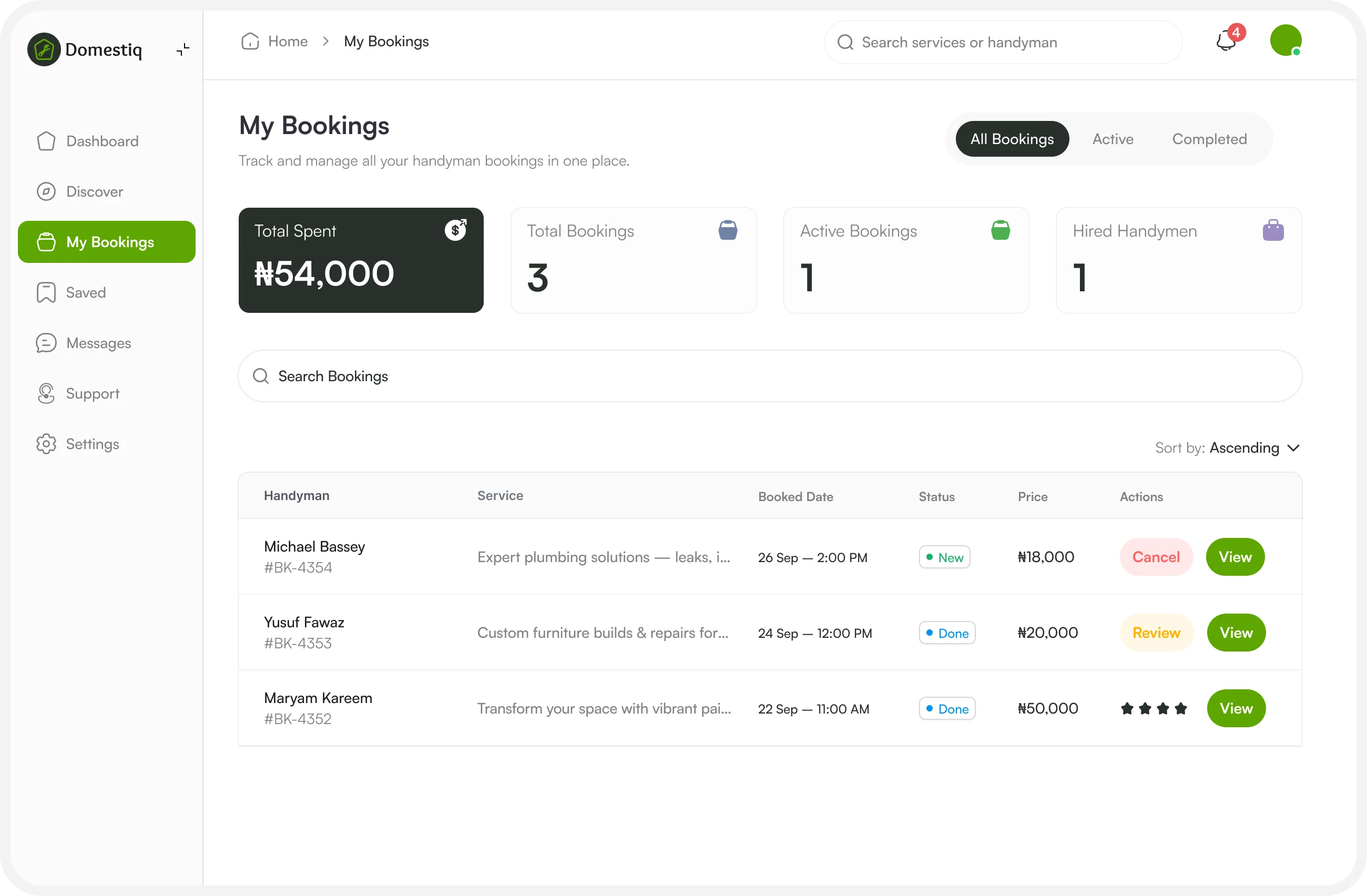
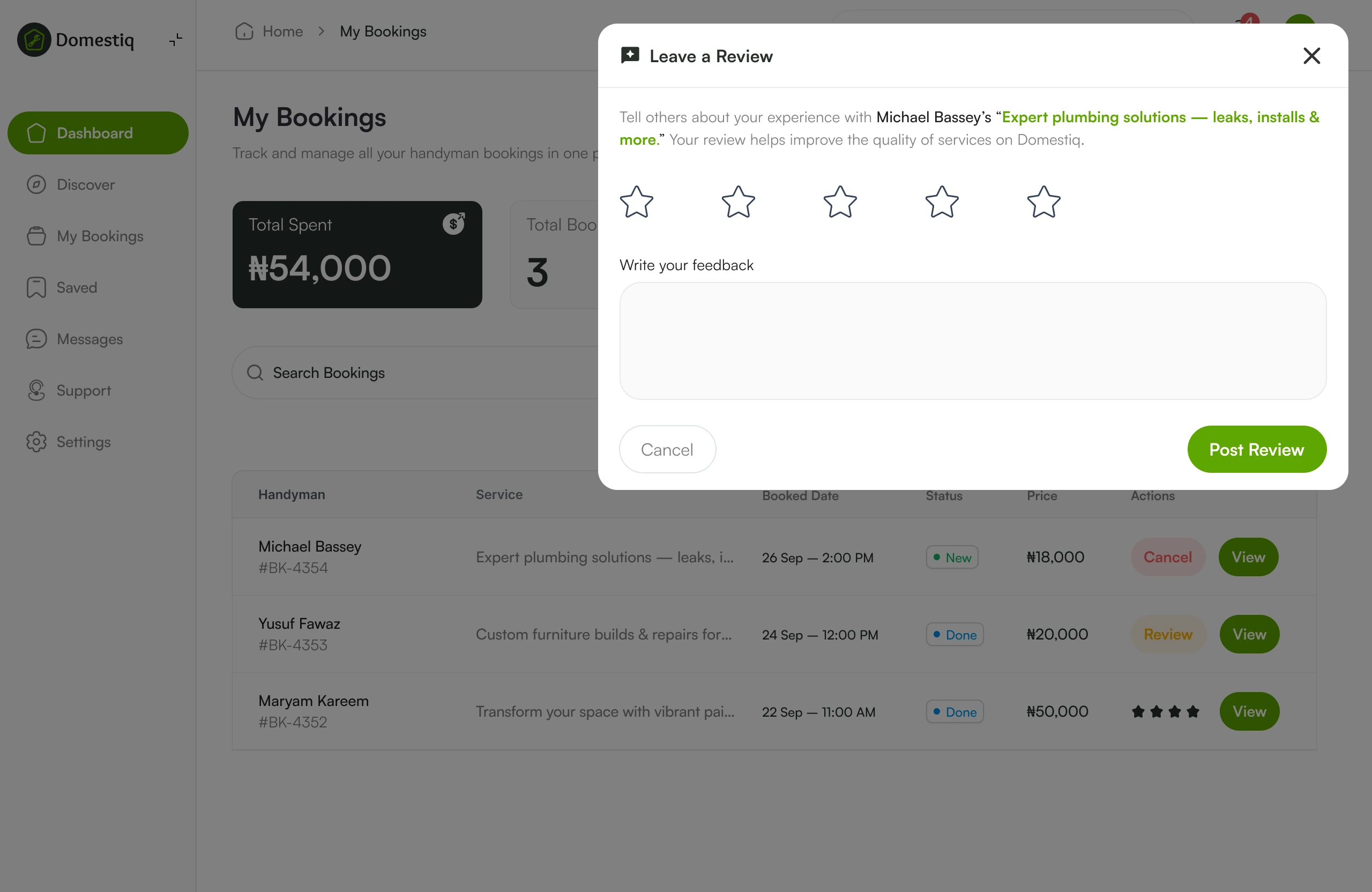
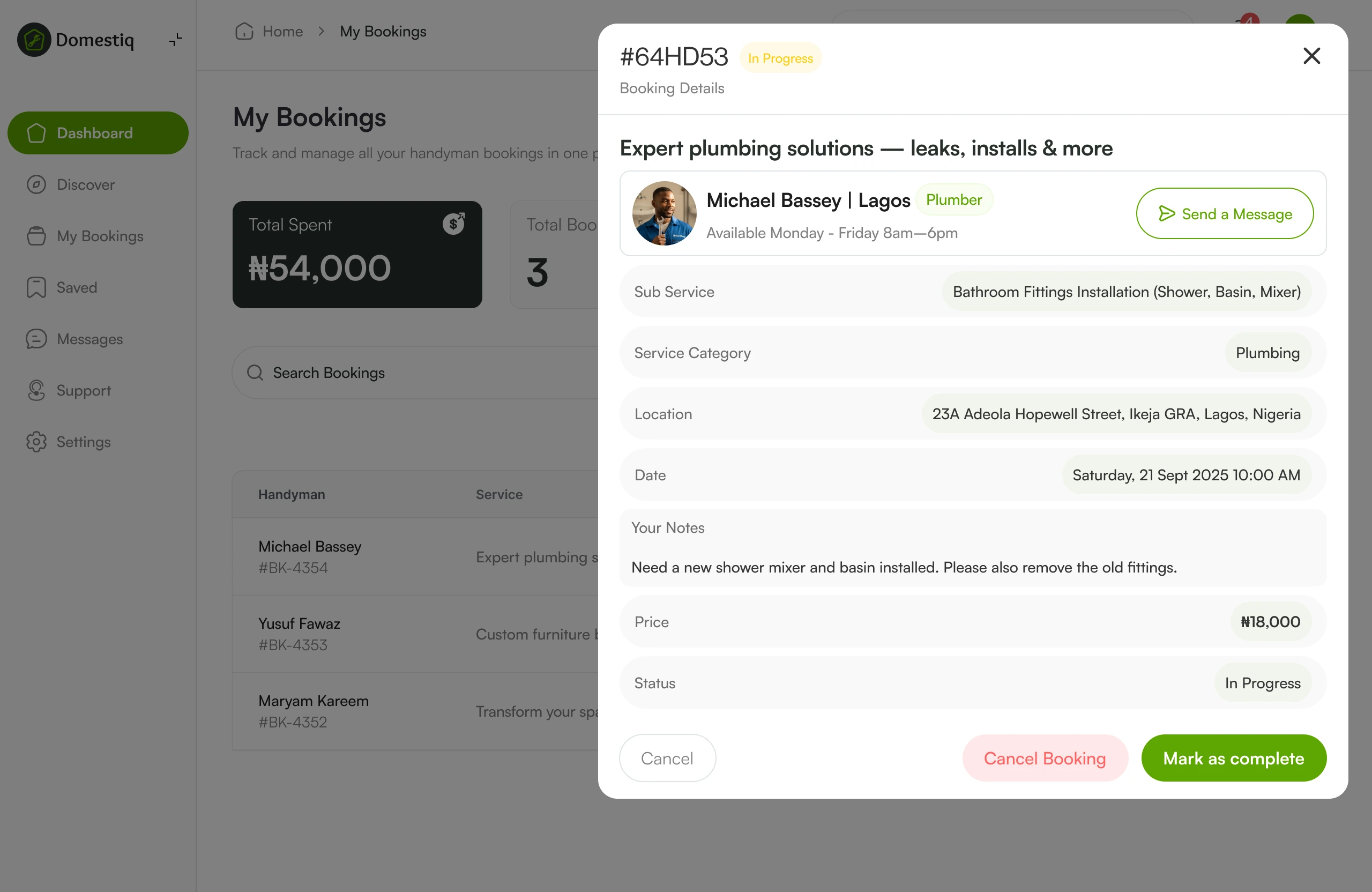
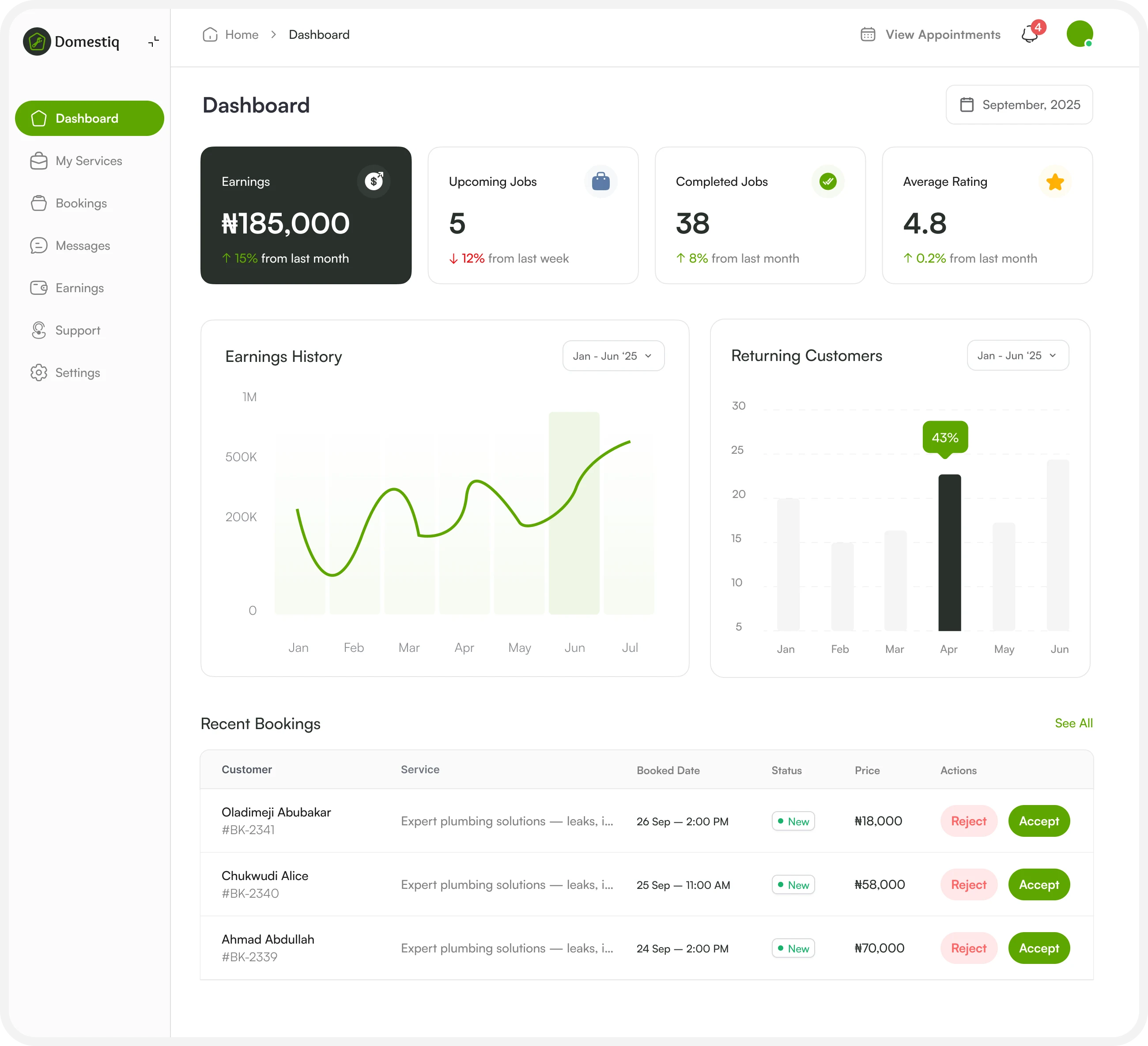
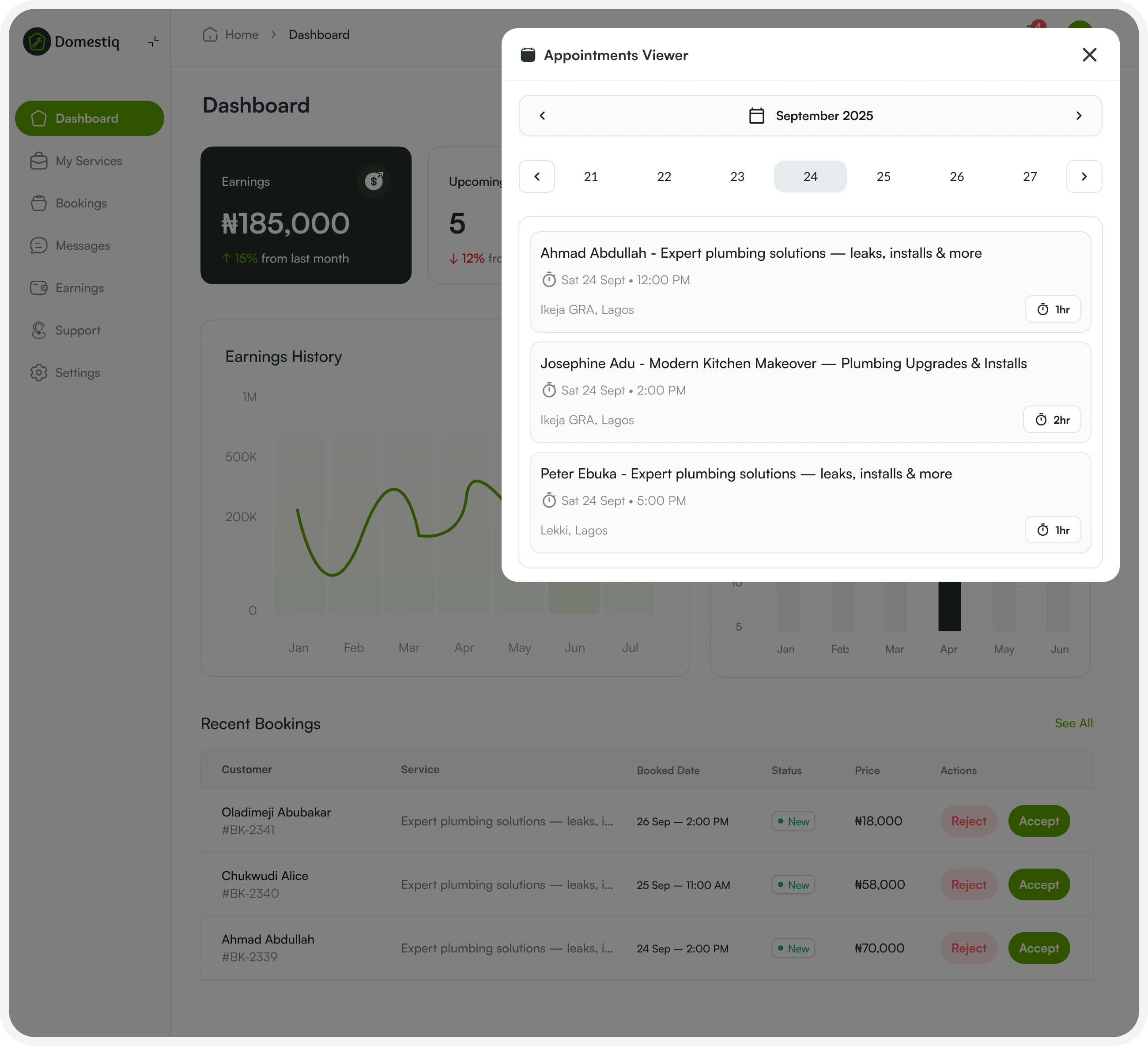
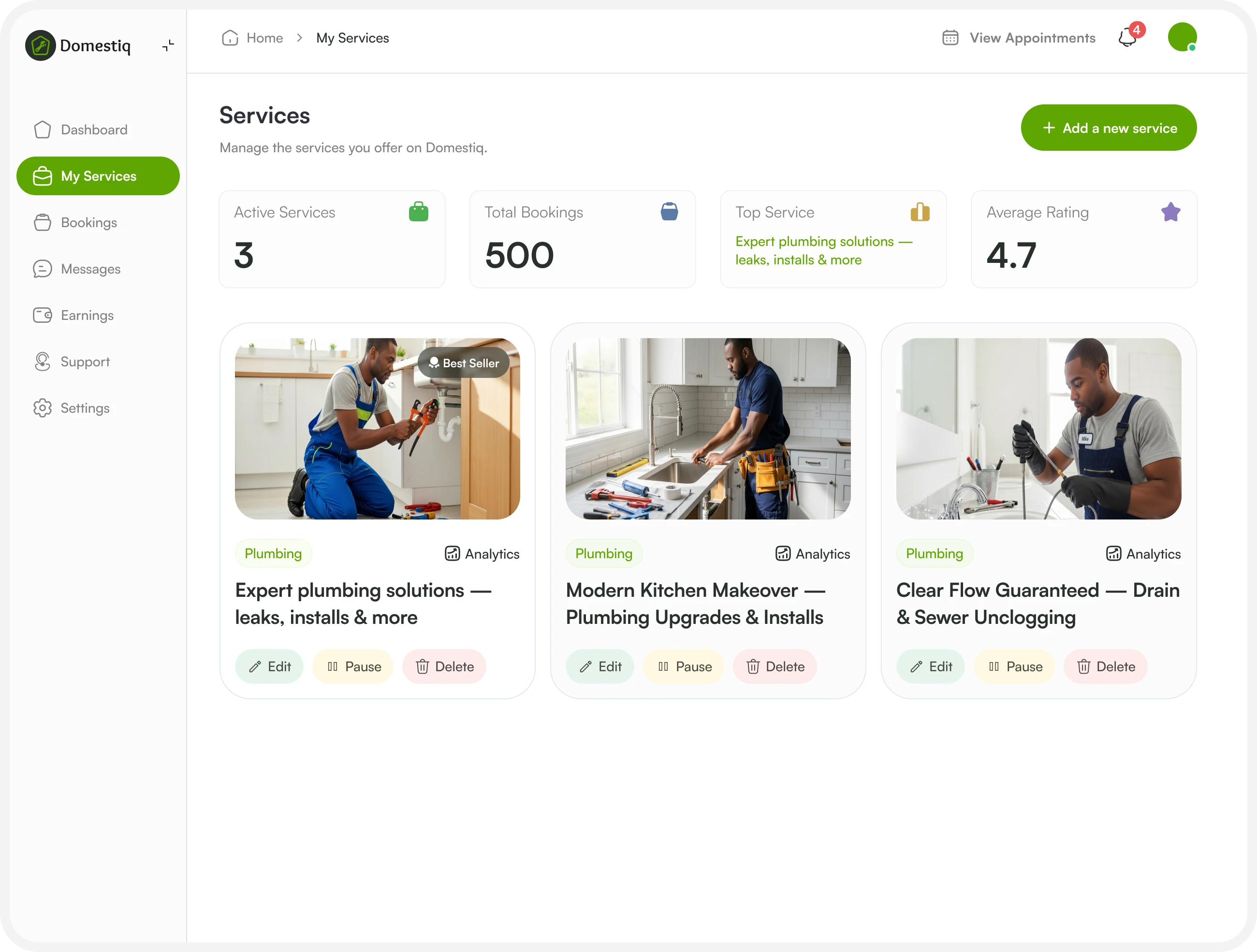
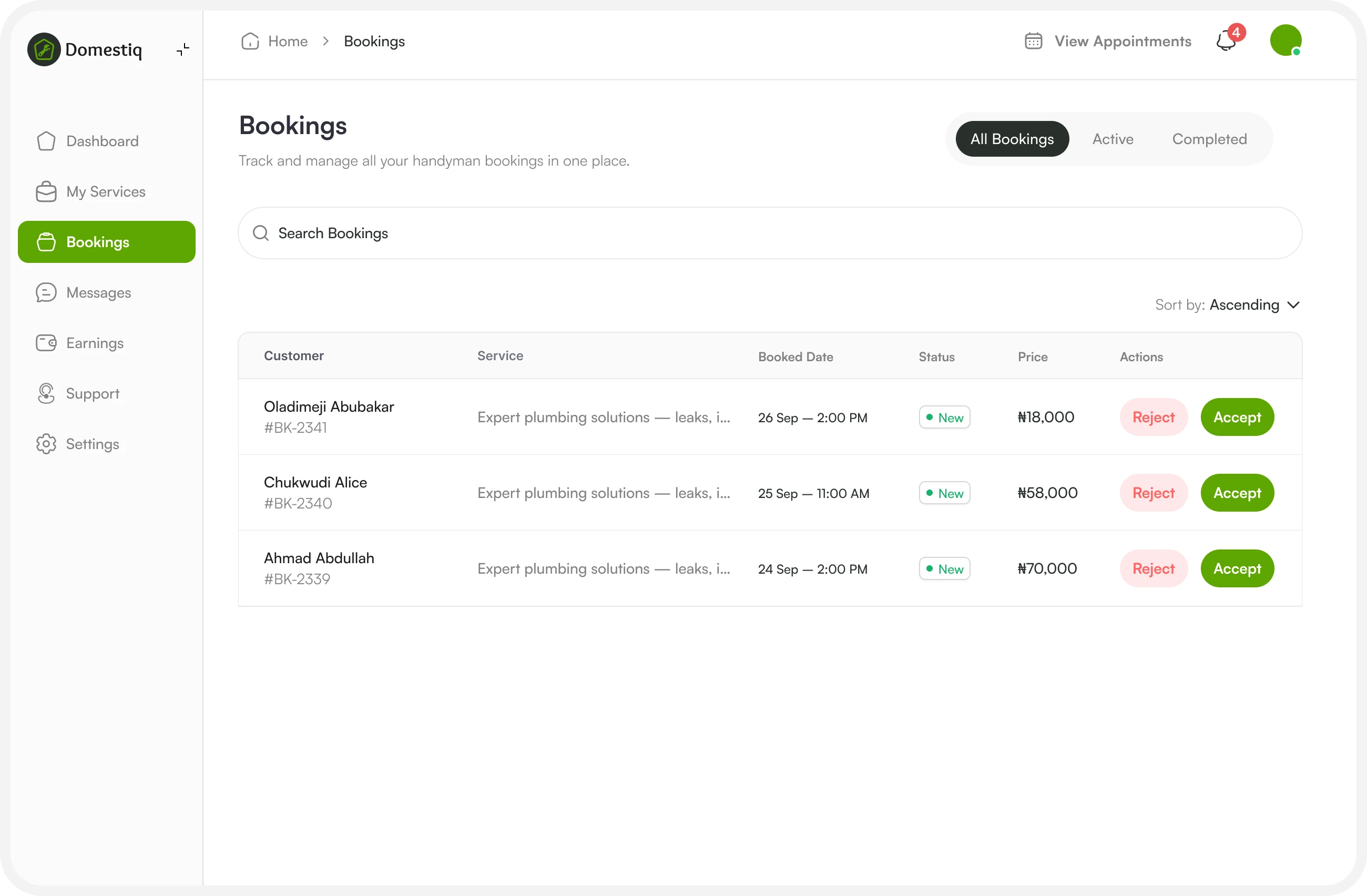
Handyman Dashboard:
Stat cards (Upcoming Jobs, Jobs Completed, Earnings, Average Rating).
Bookings table with status + actions.
Appointment viewer (quick dropdown next to notifications).
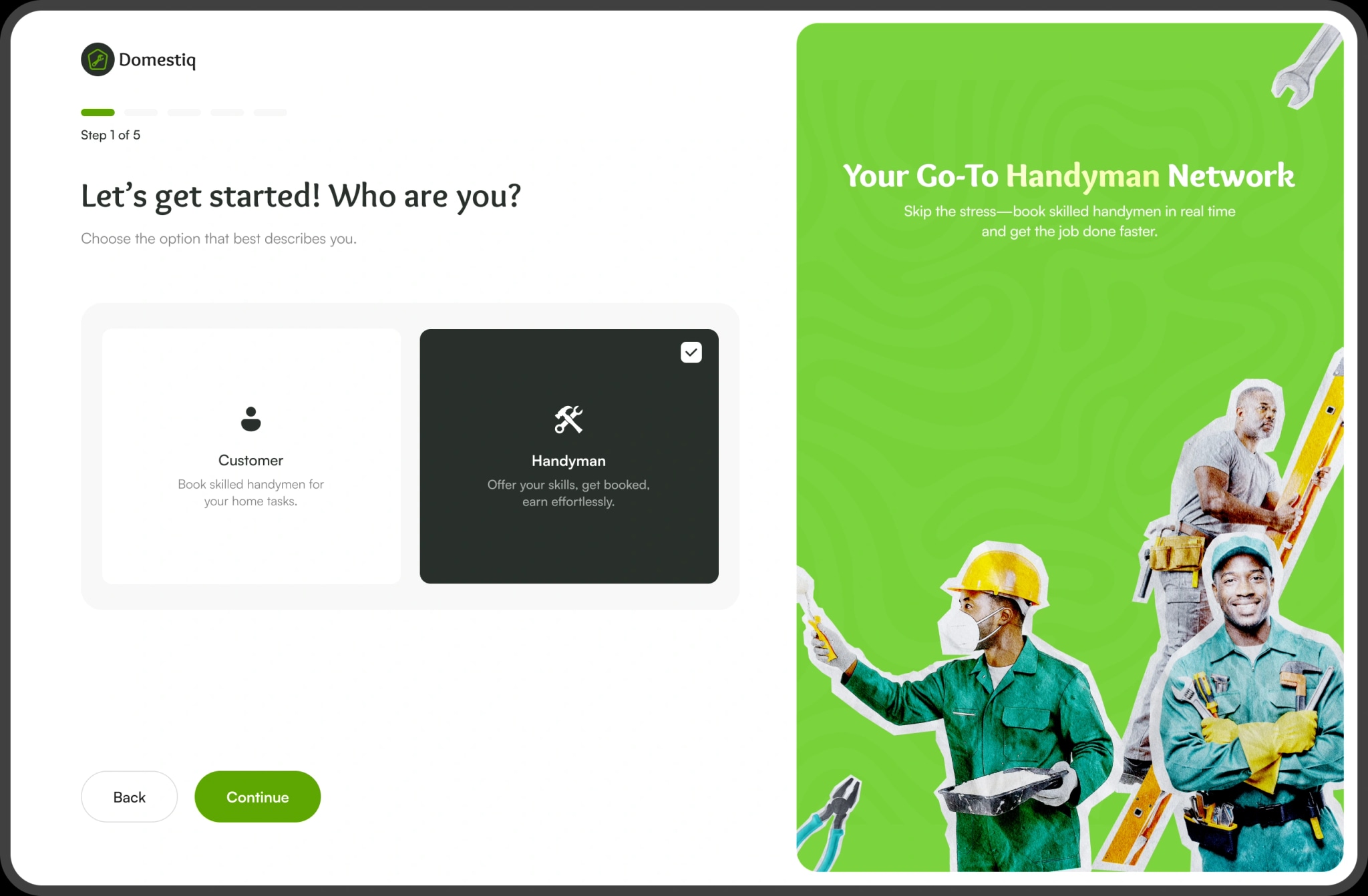
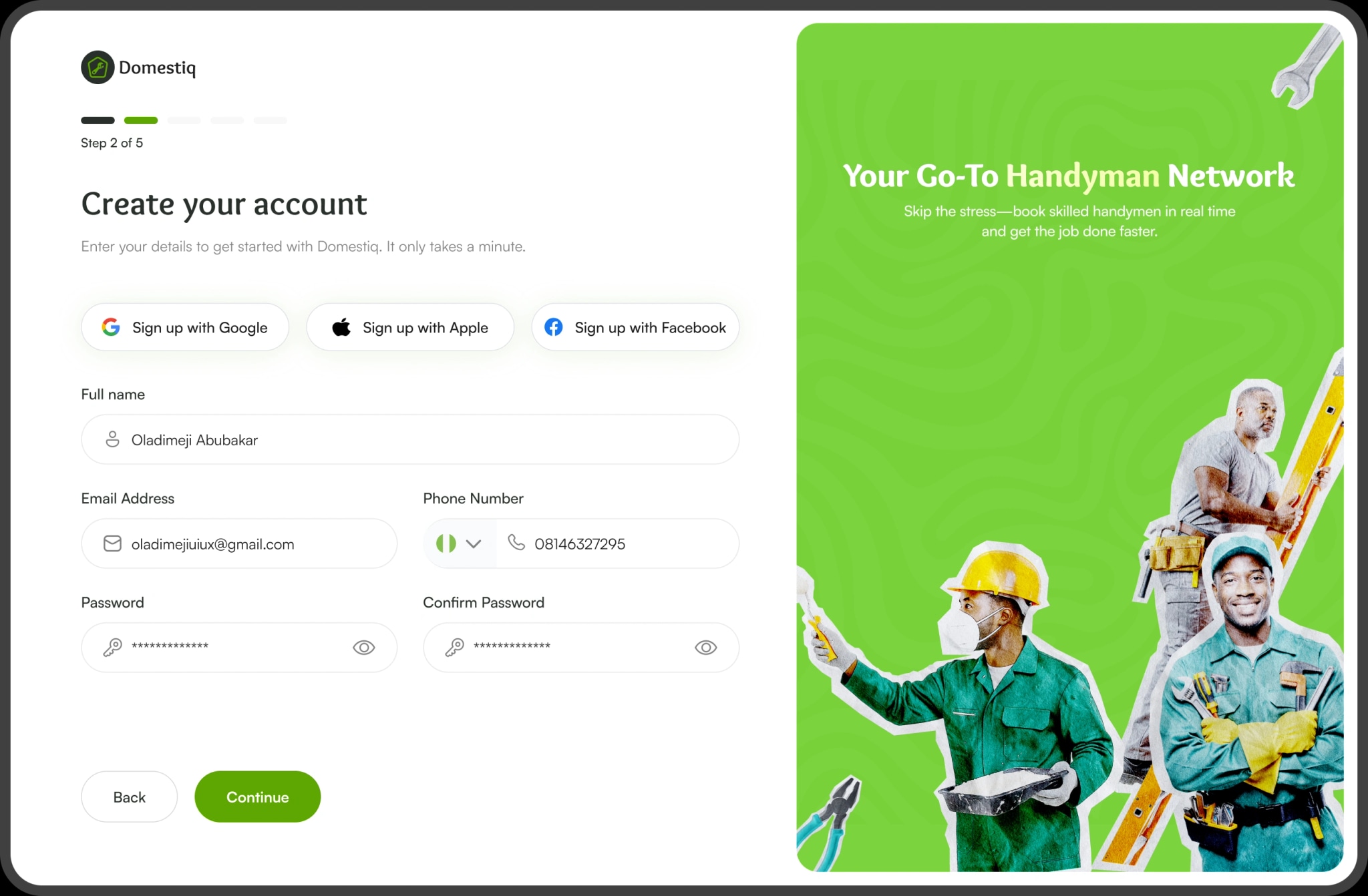
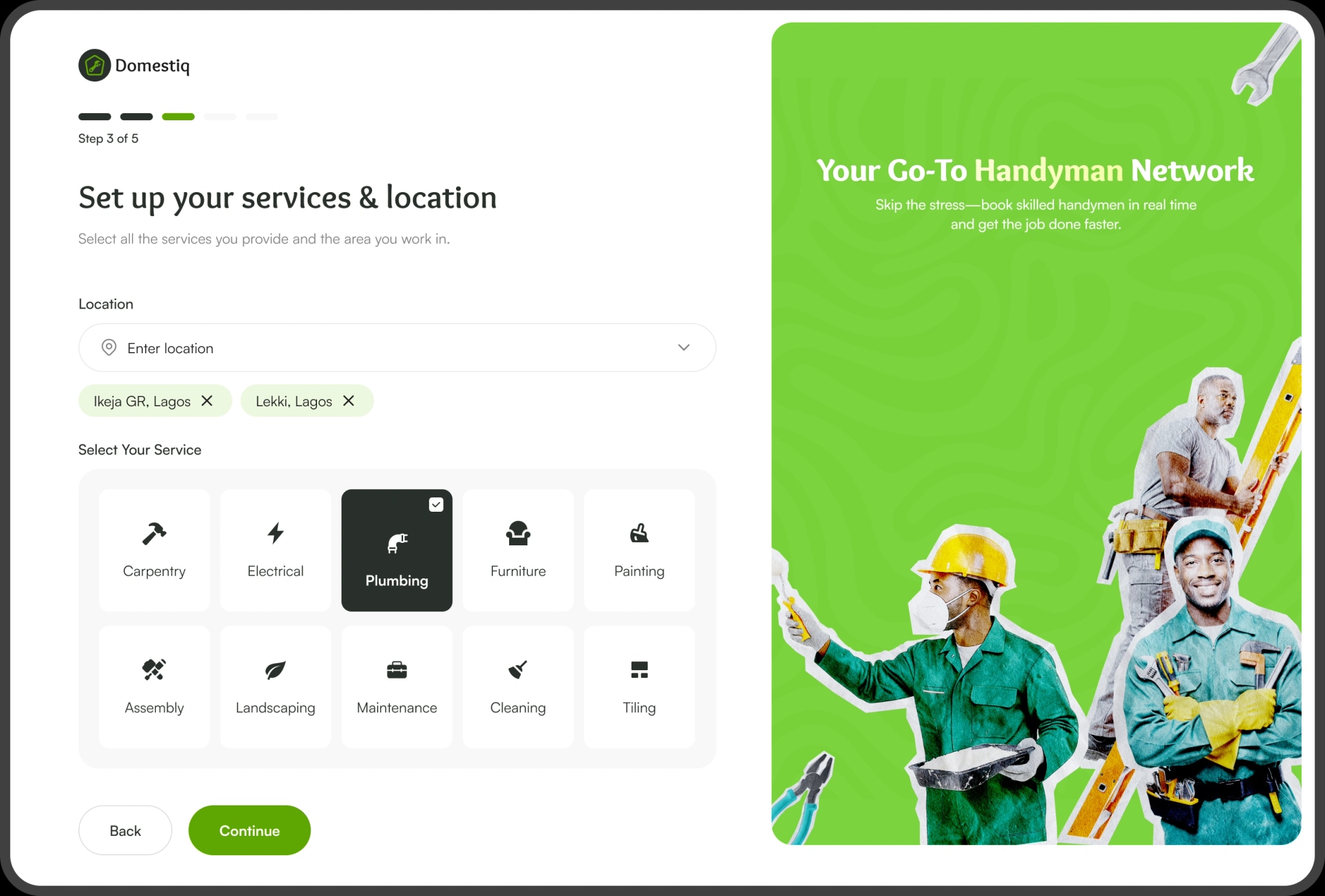
Onboarding Screens
✨ Closing
Domestiq is more than a marketplace — it’s a trust machine.Every decision, from “Nearest to You” sorting to the chat-first quoting flow, was built to reduce uncertainty, speed up bookings, and empower both customers and handymen.
This is a design that feels local, solves real friction, and scales globally.